Where is my Grab? Navigating the Shiny New Saigon Metro Without Losing Your Mind
Survive the 2026 opening of Saigon Metro Line 1 with our guide to the Ben Thanh 'Lotus' station, smart card etiquette, and avoiding the rush-hour crush.
For decades, the sound of Saigon was the synchronized roar of five million motorbikes. But as we step into 2026, a new sound is emerging from beneath the humid streets: the gentle hum of the Metro Line 1. After years of construction fences and 'coming soon' signs, the city has finally opened its underground doors. It’s a massive cultural shift. We are moving from the chaotic freedom of the 'hẻm' (alleyway) to the structured, air-conditioned world of the subway. For a traveler, this isn't just a way to get from District 1 to District 9; it’s a front-row seat to the 'New Vietnam.' But don't be fooled by the shiny surfaces—navigating this system requires a different kind of street smarts than dodging a Honda Dream at a busy intersection.
The Lotus in the Basement: Ben Thanh Central Station
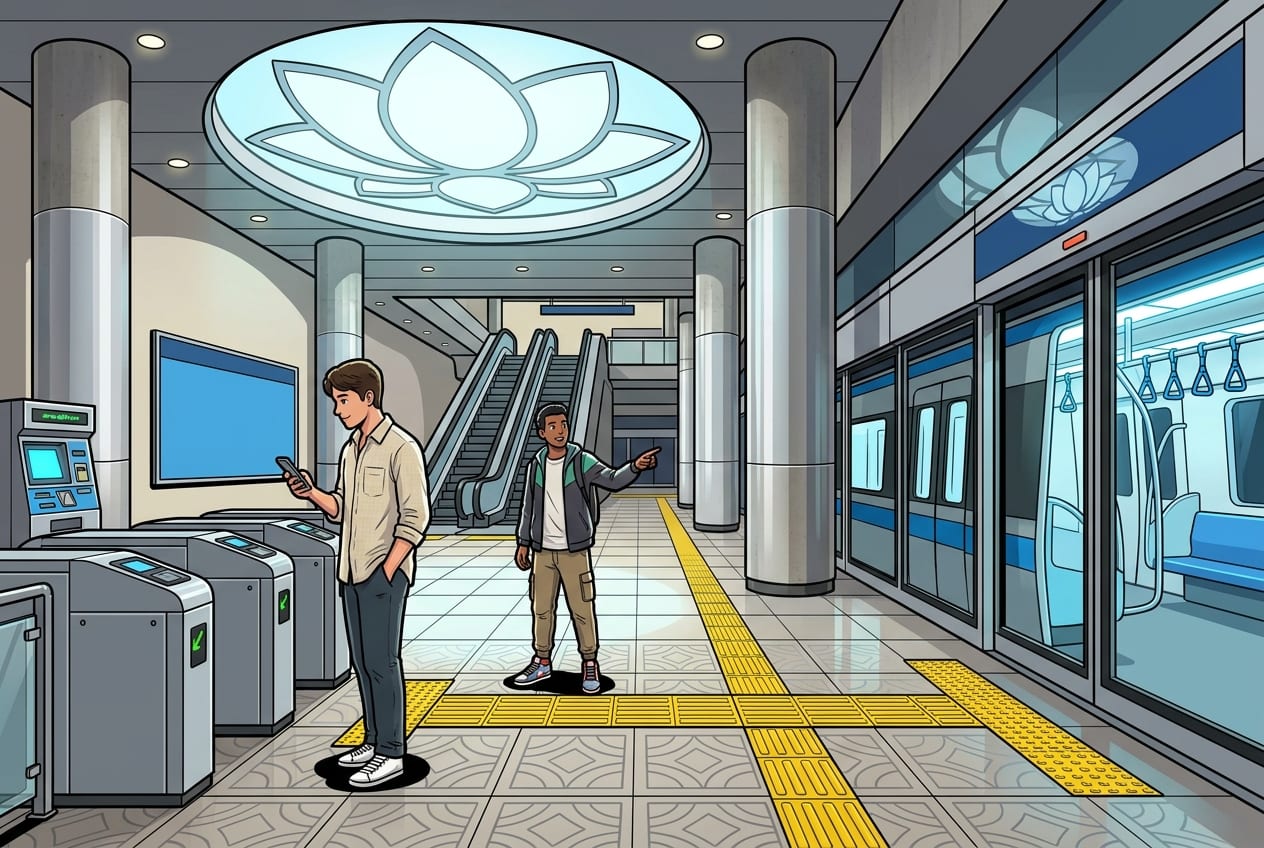
The Ben Thanh central station serves as the crown jewel of the new Metro Line 1, featuring a massive lotus-shaped skylight that brings natural sunlight deep underground. This architectural marvel symbolizes Vietnam’s rapid modernization, blending traditional floral motifs with high-tech concrete and aluminum structures to create a futuristic travel hub for locals.
When you descend into the Ben Thanh station, the first thing that hits you isn't the heat—it’s the silence. The station is designed to be a 'city beneath the city.' Look up, and you’ll see the massive circular skylight. In Vietnamese culture, the lotus represents purity and rising above the mud, which is a poetic way to describe a subway station built in the soft soil of the Mekong Delta. The light pours down onto floors tiled with decorative cement patterns, a nostalgic nod to the old French-style tiles you still see in colonial villas. It’s a blend of the old soul of Saigon and a 'Blade Runner' future. You’ll see massive concrete pillars wrapped in brushed aluminum, making the space feel more like a modern art gallery than a transit hub.
Navigating the Ben Thanh Maze
Finding your way through the vast underground corridors of Ben Thanh requires paying close attention to the bright yellow tactile paths and the digital signage. Travelers should follow the glowing blue and green boards to reach the correct platforms, as the station connects multiple future lines and several commercial levels.
The station is huge. It’s not just a place to catch a train; it’s an underground mall. You’ll find locals standing near large rectangular boards, gesturing at maps while checking their phones. The layout is designed to handle thousands of people, with wide corridors leading toward escalators that seem to disappear into the upper commercial levels. If you feel lost, just follow the yellow tactile paths on the floor. These aren't just for the visually impaired; they are the 'golden thread' that leads you safely to the ticket gates. The atmosphere is a cool, artificial white, a sharp contrast to the golden hour glow of the sun hitting the streets above.
From Motorbike Helmets to Hand Straps: The Cultural Shift
Riding the Metro introduces new social rules to Saigon, where the free-wheeling chaos of the motorbike is replaced by orderly queues and platform screen doors. Passengers are expected to stand behind the yellow tactile paths and wait for others to exit, a behavior that contrasts with the competitive traffic outside.
In the 'old' Saigon, the rule of the road was 'if there is a gap, fill it.' On the Metro, that doesn't work. For the first time, Saigonese are learning the art of the queue. You’ll see commuters in contemporary urban attire—office workers in crisp shirts and students with tech backpacks—standing patiently behind ceiling-high glass platform screen doors. When the blue and grey train slides into the station, there is a brief moment of tension: will people wait for others to get off? Mostly, yes. The 'Saving Face' culture is moving underground; nobody wants to be the one person being 'un-modern' in such a shiny new environment. Inside the train, the vibe is minimalist. Hard blue benches and rows of hanging hand straps replace the padded seats of a motorbike. It’s cleaner, cooler, but arguably less social than the banter you hear at a red light.
Mastering the Ticket Machine
Navigating the fare gates requires a shift from the traditional cash-heavy street economy to digital smart cards or smartphone payments. Travelers must tap their plastic cards against glowing silver sensors to enter the vast, air-conditioned corridors, marking a significant change in how Saigonese interact with public infrastructure.
Don't look for a guy in a green vest to pay for your ride. You’ll need to use the ticket vending machines. These machines are the first interaction many locals have with automated service. You’ll see small groups of people clustering around the screens, faces illuminated by the soft light of the digital interfaces, figuring it out together. You can use thin plastic smart cards or even your phone. Tapping that card against the glowing surface of the silver fare gates is the new 'starting your engine.' It feels high-tech, but don't worry—there are usually helpful staff members nearby who are just as excited about the machines as you are.
The 'Last Mile' Problem: Why You Still Need a Grab
While the Metro connects major districts, the final walk from the station to your favorite street food stall remains a challenge in the Saigon heat. Most commuters rely on a combination of walking through shaded corridors and quickly hailing a motorbike taxi to navigate the narrow, winding alleys nearby.
The Metro is great for crossing the city, but it won't drop you at the door of that hidden Banh Mi stall. This is what locals call the 'Last Mile' problem. Saigon was built for motorbikes, not for walking long distances in 35-degree heat. When you exit the station, you’ll likely see a swarm of 'Xe Om' (motorbike taxi) drivers waiting at the top of the escalators. The transition from the cool, futuristic underground to the humid, noisy street is a physical shock. The smart traveler uses the Metro to bypass the bridge traffic, then hops on a Grab for the final 500 meters into the 'hẻm.' It’s a hybrid lifestyle: high-tech transport for the long haul, traditional wheels for the final stretch.
Do
- Stand behind the yellow line on the platform for safety.
- Offer your seat to the elderly or pregnant women—traditional respect still applies underground.
- Keep your smart card ready before you reach the gate to avoid blocking the flow.
- Enjoy the air conditioning, but bring a light jacket if you are sensitive to cold.
Don't
- Don't bring strong-smelling food like durian or fermented shrimp paste onto the train.
- Don't lean against the glass platform doors while waiting.
- Avoid talking loudly on your phone; the Metro is much quieter than the street.
- Don't try to force the doors open; they are automated and very sensitive.
Sightseeing from the Elevated Tracks
As the train emerges from the underground tunnels into the elevated sections, passengers are treated to a panoramic view of the Saigon River and the city’s evolving skyline. This perspective offers a unique look at the contrast between historic French-style villas and the gleaming glass towers.
Once the train leaves the District 1 underground, it climbs onto elevated tracks. This is the best part of the journey. You’ll soar over the traffic jams of Hanoi Highway. From your window, you can see the contrast of Saigon: the red-tiled roofs of old houses tucked between towering skyscrapers like Landmark 81. It’s a perspective you never get from a motorbike because you’re usually too busy watching the wheel of the guy in front of you. The train crosses the Saigon River, giving you a sweeping view of the water and the boats. It’s the most peaceful way to see the city.
Can I bring my morning Cà phê sữa đá (iced coffee) onto the Metro?
While there isn't a strict 'coffee police' yet, it is generally discouraged to bring open drinks onto the trains to keep the new upholstery clean. Most locals finish their drinks before passing through the fare gates or carry them in a sealed bag.
Does my Grab app work with the Metro ticket system?
In 2026, there is better integration, but usually, you still need a separate Metro smart card or a linked local e-wallet (like MoMo or ZaloPay). You can't just 'book' a train seat on Grab, but you can use Grab to get to the station entrance.
What happens if I lose my ticket card while I'm inside the station?
Don't panic. Head to the 'Customer Service' booth located near the silver fare gates. You will likely have to pay the maximum fare for the line, but the staff are used to new users making mistakes and are generally very patient.
Avoiding the 'Rush Hour Crush'
Understanding the rhythm of Saigon’s commuters is vital for a comfortable journey, as peak hours can turn the minimalist blue-and-grey carriages into packed sardines. By planning trips between the morning and evening rushes, travelers can enjoy the cool artificial light and spacious seating.
Saigon is a city that wakes up early. The morning rush starts around 7:00 AM and lasts until 9:00 AM. During this time, the Metro is the preferred choice for office workers trying to avoid the sweat of a motorbike commute. If you are a traveler, avoid these times! The 'hard blue benches' fill up fast, and you’ll find yourself standing shoulder-to-shoulder with hundreds of people. The same happens from 5:00 PM to 7:00 PM. The best time to ride is mid-morning or mid-afternoon. You’ll have the whole carriage to yourself, plenty of room to take photos of the skyline, and a much more relaxed experience. Plus, the AC feels even colder when the train isn't full!
In conclusion, the Saigon Metro Line 1 is more than just a train; it’s a symbol of a city growing up. It’s clean, it’s fast, and it’s a great escape from the tropical sun. Just remember: keep your card handy, mind the gap, and don't forget that once you step back out into the light, the motorbikes will be waiting for you. Welcome to the future of Saigon—watch your step!
Topics
Read more
Other posts from our Vietnamese learning blog.
By Xinchao team
Gặp nhau! Why You Can't Miss Vietnam's First-Ever Culture Day on November 24, 2026!
Mark your calendars! Vietnam's new Culture Day on November 24, 2026, promises a nationwide celebration of heritage. Learn what this "spiritual rendezvous" means for locals and how travelers can dive into unique cultural experiences across the country.
By Xinchao team
Zen & Lens: Your Guide to Pagoda-Hopping for Peace and Perfect Shots in Vietnam
Ready to explore Vietnam's stunning pagodas? Learn the 'whys' behind local customs, master respectful etiquette, and discover the best spots for breathtaking photos and serene reflection. Your guide to an unforgettable cultural adventure awaits!
By Xinchao team
Beyond Bia Hơi: Where the Hops Are Hopping and the Toasts Are Roaring in Vietnam!
From aromatic IPAs to rich coffee stouts, Vietnam's craft beer scene is exploding. Get ready to explore vibrant taprooms, bustling festivals, and master the art of the Vietnamese toast, 'Một, hai, ba, dô!'