From Venice to the Streets: How to Dive Into Vietnam's Booming Art Scene (Even If You Skip the Gondola!)
Vietnam is stepping onto the global art stage, but you don't need a ticket to Venice to witness its thriving creative spirit. Dive into a kaleidoscope of tradition and modernity right here in the heart of the country.
Vietnam Takes the Global Stage: The Venice Biennale Debut
Imagine a moment when a nation, rich in history and vibrant culture, finally gets its spotlight on one of the world's most prestigious art platforms. That moment is coming for Vietnam in 2026. For the very first time, Vietnam will officially debut at the 61st Venice Art Biennale, a monumental step that will introduce its unique artistic voice to a global audience. This isn't just about art; it's about cultural dialogue, about sharing stories, and about showing the world the depth of Vietnamese creativity.
The exhibition, aptly titled "Viet Nam: Art in the Global Flow," promises to be a journey through the evolution of Vietnamese art. It will be housed in the stunning Ca' Giustinian Faccanon palace, running from May 9 to November 22, 2026. Curated by the visionary Đỗ Tường Linh, the pavilion will feature works by ten talented artists. A central theme will be lacquer, a medium deeply embedded in Vietnamese tradition, showcased as it transforms from a revered craft into a contemporary artistic language. One of the highlights will be Hanoi-based artist Lê Hữu Hiếu's immersive installation, "Tằm" (silkworm), which weaves together history, folklore, and spirituality using culturally significant materials like jackfruit wood, gold leaf, eggshell, and even live silkworms. This debut is a crucial milestone, fostering a rich exchange between local practices and global perspectives, highlighting Vietnam's growing influence in the international art world. You can find more details on this historic debut from sources like the Vietnam National Administration of Tourism and various art news outlets.
Beyond Venice: Diving into Vietnam's Art Hubs
While the Venice Biennale is a fantastic reason to celebrate, you don't need a plane ticket to Italy to experience Vietnam's artistic pulse. The country itself is brimming with vibrant art scenes, especially in its major cities. For travelers looking to immerse themselves in local creativity in 2025-2026, Hanoi and Ho Chi Minh City (HCMC) are your go-to destinations. These urban centers are hotbeds of artistic expression, offering everything from cutting-edge contemporary galleries to traditional craft workshops and dynamic street art.
Exploring these art hubs offers a unique window into Vietnam's soul. It's not just about seeing beautiful objects; it's about understanding the narratives, the history, and the aspirations of a nation expressed through its artists. From the quiet contemplation of a lacquer painting to the bold statements of a street mural, the art scene here is as diverse and captivating as the country itself. Whether you're an art connoisseur or simply curious, there's a gallery, an alleyway, or a market waiting to surprise you with its artistic offerings.
Ho Chi Minh City: Modern Pulse, Artistic Heart
HCMC, with its bustling energy and rapid modernization, is a fertile ground for contemporary art. The city's galleries often reflect its dynamic spirit, showcasing works that are both innovative and deeply rooted in Vietnamese identity. You'll find a mix of established names and emerging talents pushing boundaries.
One of the most internationally recognized spaces is Galerie Quynh. Known for its rigorous contemporary programming, it has been a cornerstone of the HCMC art scene for over two decades, representing a strong roster of Vietnamese and international artists. Another notable spot is Vin Gallery, which focuses on abstract paintings and modern sculptures, often by artists under 40, making it a great place to discover new voices. For a more expansive experience, The Factory Contemporary Arts Center stands out as Vietnam's first purpose-built space for contemporary art. It hosts exhibitions, performances, and educational programs, providing a vital platform for artistic experimentation and public engagement. These institutions are pivotal in fostering the growth and visibility of the Vietnamese contemporary art scene, offering both local artists and international visitors a space for dialogue and appreciation.
Hanoi: Heritage & Innovation in Every Brushstroke
Hanoi, the ancient capital, offers a different flavor of art. Here, tradition often intertwines with contemporary expression, creating a scene that is both reflective and forward-looking. The city’s art spaces range from grand national museums to intimate, experimental venues.
A must-visit is the Vietnam National Fine Arts Museum, which provides a comprehensive overview of Vietnamese art history, from ancient artifacts to modern and contemporary works. It's an essential starting point to understand the foundations of the country's artistic traditions. For those interested in purchasing original art, Nguyen Art Gallery is known for showcasing high-quality Vietnamese artworks, including silk paintings and lacquerware. If you're looking for something more experimental and a vibrant social scene, Manzi Art Space and Café is a popular choice. Housed in a charming colonial villa, Manzi hosts exhibitions, film screenings, and live music, fostering a community around contemporary and experimental art. These venues help define Hanoi's unique artistic landscape, blending historical reverence with a keen eye for modern innovation.
The Soul of Vietnamese Art: Tradition Meets Contemporary
Vietnamese contemporary art is far from a mere imitation of Western trends. It's a deeply personal and collective narrative, reflecting the nation's journey through war, rapid modernization, and globalization. Artists often skillfully blend traditional elements – from ancient folklore to historical motifs – with modern perspectives, creating works that are uniquely Vietnamese yet universally resonant. This fusion is what gives the art its distinctive character, telling stories that span centuries while speaking to present-day realities.
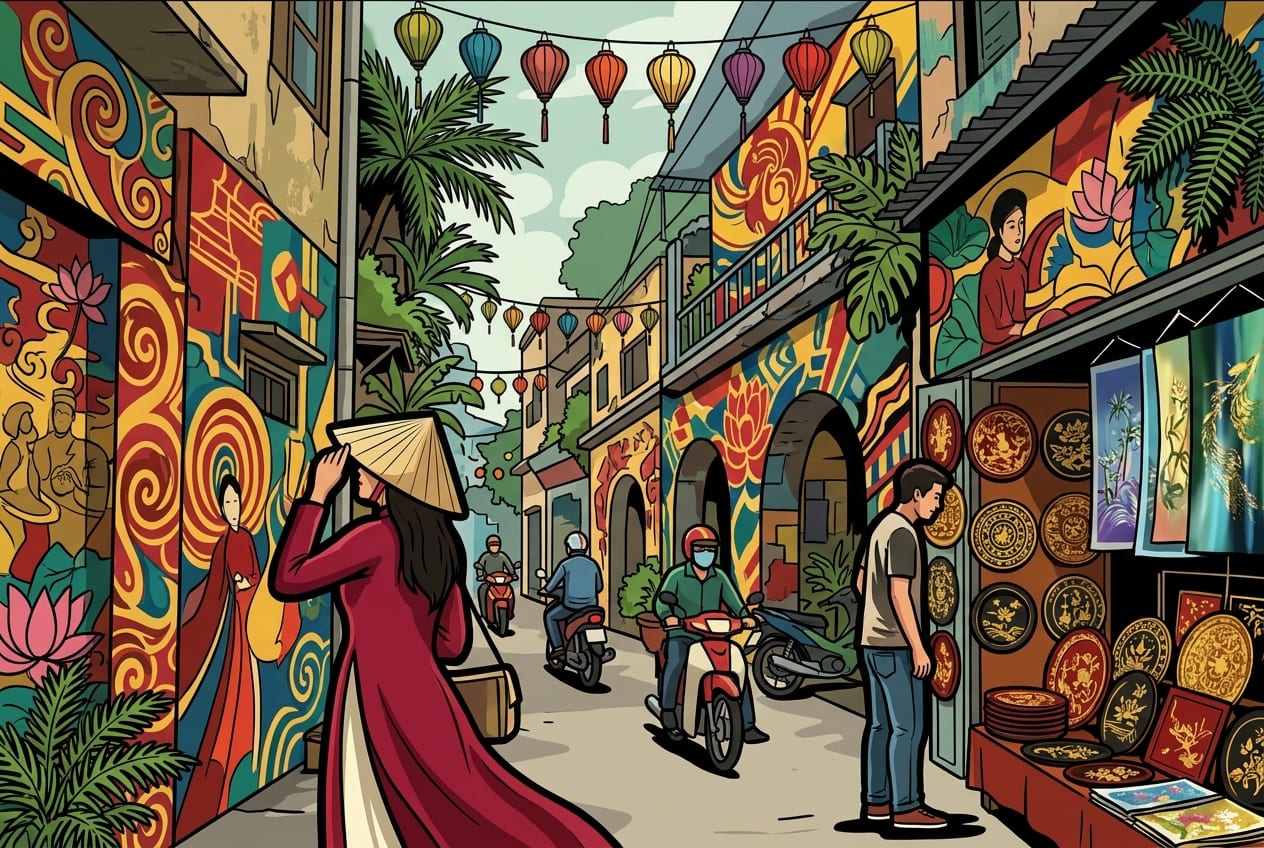
Beyond formal galleries, Vietnam's street art offers another powerful lens into its cultural identity. Unlike some global street art movements that focus on rebellion, Vietnamese street art is deeply rooted in local culture, often celebrating themes of unity, hope, and community pride. You'll see traditional motifs, like dragons or lotus flowers, fused with modern techniques and vibrant colors, transforming urban landscapes into public canvases. This public art serves as a collective voice for residents, embodying shared memories and fostering a strong sense of community pride. It’s a dynamic, accessible form of art that connects directly with the everyday lives of people, making it a vital part of the contemporary scene. For more on the role of art in public spaces, consider checking out resources like UNESCO's cultural heritage initiatives.
Experiencing Art Like a Local: Tips & Etiquette
When you step into Vietnam's art spaces, whether it's a sleek gallery or a bustling street market, a little cultural understanding goes a long way. This isn't just about avoiding offense; it's about showing respect and engaging more deeply with the local culture. Vietnamese people are generally warm and welcoming, and appreciating their customs will enhance your experience significantly.
For instance, while taking photos in galleries is often acceptable, it’s always best practice to ask permission first. A simple nod or a polite gesture can suffice. More importantly, never touch the artwork. Oils from your hands can damage delicate surfaces, especially with traditional mediums like lacquer or silk. When visiting formal events, religious sites like pagodas (a great topic to explore in our guide to Zen & Lens: Your Guide to Pagoda-Hopping for Peace and Perfect Shots in Vietnam), or higher-end galleries, conservative attire is recommended: long pants and collared shirts for men, and modest dresses or non-revealing blouses with pants for women. This shows respect for the venue and the culture. In fact, wearing the elegant Áo Dài, Vietnam's national costume, is often encouraged and seen as a beautiful way to engage with the culture and its artistic heritage. It's a gesture that speaks volumes about your appreciation.
Do
- Always ask permission before taking photos in galleries or of people.
- Dress modestly when visiting formal art spaces or religious sites.
- Engage with local artists and artisans respectfully.
- Consider wearing an Áo Dài for cultural events or special visits.
Don't
- Never touch artwork in galleries or museums.
- Avoid loud conversations or disruptive behavior in quiet art spaces.
- Don't haggle aggressively for art pieces, especially in established galleries.
A Feast for the Eyes: Visuals & Materials
Visually, Vietnam's art scene is nothing short of a kaleidoscope. From the bustling streets to the serene gallery interiors, every corner offers a unique aesthetic experience. The vibrant energy of the country translates directly into its art, creating a rich tapestry of colors, textures, and forms that captivate the senses.
Street art, for example, transforms urban spaces into dynamic canvases. In Hanoi, you can wander down Phung Hung Mural Street, where old railway arches become vibrant narratives, or explore HCMC's Le Duan Street, where murals pop with life. Dominant colors often include rich reds (symbolizing luck and prosperity), auspicious yellows (royalty, happiness), serene blues and greens (nature, peace), and pure whites (purity, new beginnings), all reflecting deep traditional symbolism. You'll see murals depicting scenes of daily life, traditional festivals, historical narratives, often featuring figures in flowing Áo Dài and iconic conical hats (Nón Lá). The surrounding environment is typically bustling, with the rhythmic hum of motorbikes, the aroma of street food wafting through the air, and the lushness of tropical plants spilling from balconies. Galleries, on the other hand, can range from sleek, modern white cubes to charming colonial-era buildings with distinct French and Chinese architectural details. These spaces are often bathed in natural light or the warm glow of traditional lanterns, especially in places like Hoi An, adding to the ambiance. Artists frequently utilize traditional materials such as silk, lacquer (sơn mài), ceramics (gốm sứ), and wood (gỗ), showcasing intricate details and layered techniques that speak to centuries of craftsmanship. These materials are not just mediums; they are carriers of cultural memory and artistic innovation.
What is the significance of lacquer in Vietnamese contemporary art?
Lacquer, or sơn mài, is a traditional medium with a rich history in Vietnam. Its significance in contemporary art lies in its evolution from a revered craft to a sophisticated artistic language. Artists use multi-layered techniques with materials like gold leaf, eggshell, and mother-of-pearl, allowing them to create intricate textures and luminous depths. This medium connects modern expressions with centuries of Vietnamese cultural heritage, as seen in the works selected for the Venice Biennale.
Can I buy contemporary Vietnamese art as a traveler, and what should I expect regarding prices?
Yes, absolutely! You can purchase contemporary Vietnamese art from various galleries in Hanoi and Ho Chi Minh City, as well as from local artists and craft markets. Prices vary widely depending on the artist's reputation, the medium, and the size of the artwork. In established galleries like Vin Gallery, pieces by emerging artists might range from 10-100 million VND (approximately $400-$4,000 USD), while works by more renowned artists can easily be several thousand US dollars. For traditional crafts like ceramics or silk paintings, prices can be more modest, ranging from a few hundred to a few thousand US dollars. Always ensure you purchase from reputable sources to guarantee authenticity and fair pricing.
Practise the words you just read
Vietnamese phrases for real situations, each with native audio in both accents.
Topics
Read more
Other posts from our Vietnamese learning blog.
By Xinchao team
Hue Festival 2026: Time-Traveling to Vietnam's Imperial Heart!
Experience the magic of the 2026 Hue Festival, a year-long celebration of Vietnam's imperial past. From royal court music to dazzling river parades, get ready for an unforgettable cultural immersion in Hue.
By Xinchao team
The Yellow Tent on the Street: A Respectful Guide to Attending a Vietnamese Funeral
An essential guide to navigating a Vietnamese funeral (đám tang) with respect, covering dress codes, condolence envelopes, and key cultural taboos.
By Xinchao team
Why Vietnam's 'Heritage Hubs' Are the Hottest New Spots for Culture, Coffee, and Community (And Where to Find Them!)
Vietnam's heritage hubs are buzzing – from ancient towns to repurposed colonial cafes. Discover why these spots are a must-visit for culture, community, and the best slow-drip coffee experiences.