The Yellow Tent on the Street: A Respectful Guide to Attending a Vietnamese Funeral
Stepping into a Vietnamese funeral can feel intimidating, but understanding the deep cultural values of community and filial piety will guide you through. Here is how to pay your respects with dignity and grace.
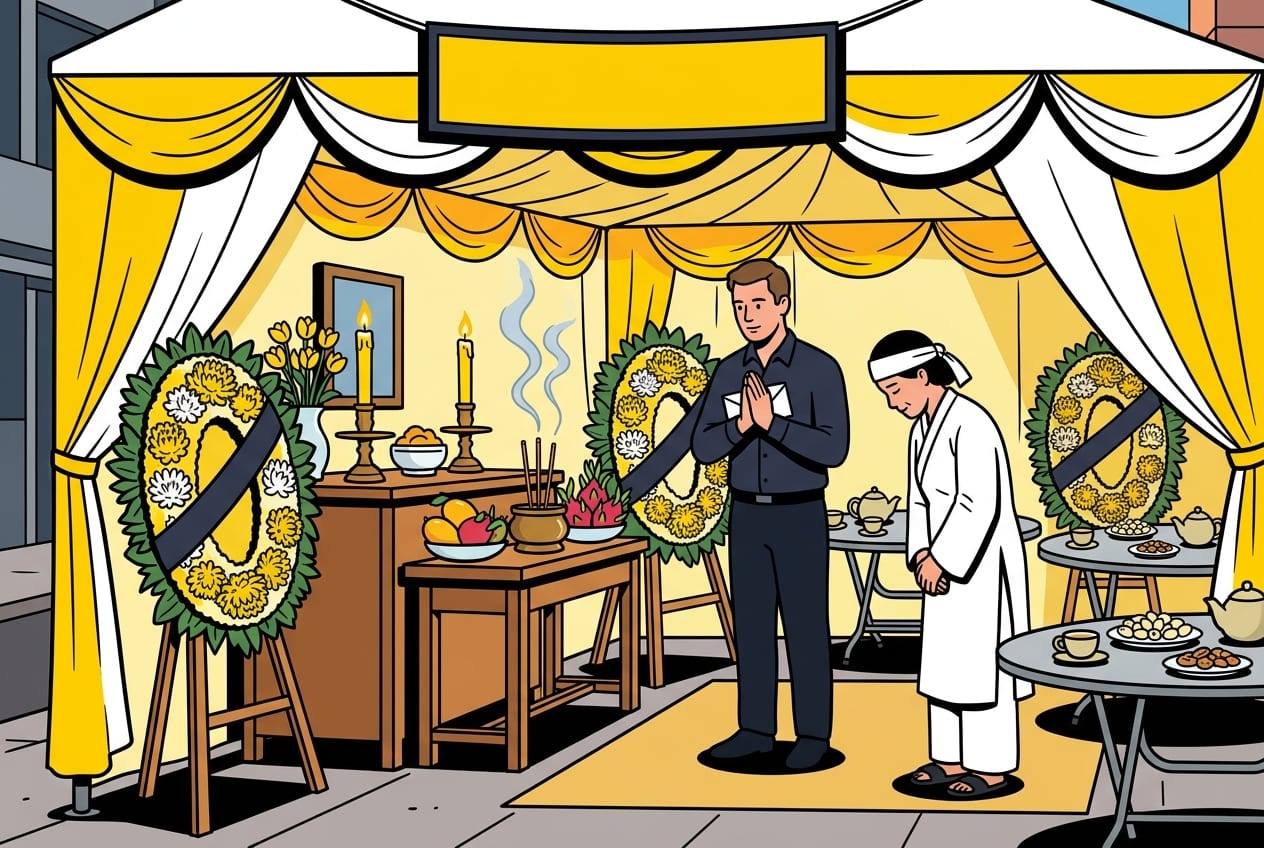
If you live in Vietnam long enough as an expat, you will eventually encounter a funeral. You might see a brightly colored yellow and white tent temporarily blocking a lane of traffic on a busy city street, hear the mournful, piercing notes of traditional wind instruments echoing through the neighborhood, or receive a solemn message from a local colleague. In Vietnamese culture, death is not hidden away behind the closed doors of private chapels. Instead, a funeral (đám tang) is a highly communal, visible, and deeply symbolic event that brings the entire neighborhood together to support the grieving family.
For foreigners, being invited to attend a funeral can bring a wave of anxiety. You want to show genuine respect, but the customs are unfamiliar, and the fear of making a cultural faux pas looms large. How much money goes in the envelope? What should you wear? What do you say to the family? By understanding the 'why' behind these traditions, you can navigate this somber occasion with quiet confidence and provide meaningful comfort to your Vietnamese friends or colleagues.
Understanding the Vietnamese Funeral (Đám Tang)
A Vietnamese funeral, or đám tang, is a deeply communal rite of passage combining Buddhist, Confucian, and animist beliefs. Rather than a private affair, it is a highly public, multi-day event designed to guide the deceased’s soul safely to the afterlife while demonstrating filial piety and reinforcing local community bonds.
To truly understand a Vietnamese funeral, one must understand the concept of ancestor worship. In Vietnam, death is not viewed as an absolute end, but as a transition to another realm where the deceased continues to watch over, protect, and influence the living family. You can read more about these spiritual foundations on Wikipedia's page on Vietnamese ancestor worship.
Because of this belief, the rituals performed during the funeral are of paramount importance. Every action, from the burning of incense to the offering of food, is designed to assist the soul on its journey. Like other major life-cycle events in Vietnam—such as weddings, which you can learn about in our Vietnamese wedding etiquette survival guide—funerals are highly collaborative. Neighbors, friends, and colleagues rally around the family, offering physical labor, emotional support, and financial contributions to help ease the burden of the loss.
What to Wear: The Dress Code of Respect
When attending a Vietnamese funeral, visitors must wear modest, dark-colored clothing such as black, navy blue, or dark grey. Bright colors, particularly red, are strictly forbidden as they symbolize joy and luck. Modesty is key, meaning shoulders and knees should always be fully covered to show proper respect.
The visual landscape of a Vietnamese funeral is highly color-coded. The immediate family members of the deceased wear white. They dress in coarse, unhemmed white cotton robes and tie white headbands (khăn tang) around their heads. This white attire is the universal symbol of mourning in Vietnam. As a guest, you must never wear white clothing or white headbands, as this would mistakenly identify you as a grieving family member.
For your attire, choose a plain, dark-colored button-down shirt or polo shirt paired with long trousers or a modest skirt that falls well below the knees. Avoid any clothing with bold patterns, large logos, or flashy embellishments. Keep jewelry to an absolute minimum. Slip-on shoes are highly practical, as you may be asked to remove your shoes before stepping onto the mats near the family altar.
The Condolence Envelope: Etiquette and Amounts
The condolence envelope, known as phong bì phúng điếu, is a vital custom of financial mutual aid for the grieving family. Guests typically contribute between 200,000 and 500,000 VND, placed in a plain white envelope handed directly to a family member or placed on a dedicated collection tray near the altar.
In Vietnam, hosting a funeral is an incredibly expensive endeavor. The family must pay for the catering of meals for dozens of guests over several days, religious ceremonies, burial or cremation plots, and musical ensembles. The condolence money (tiền phúng điếu) is a practical way for the community to share this financial weight. It is not viewed as transactional; rather, it is a form of social insurance. The family will carefully record how much you gave, and when a death eventually occurs in your own social circle, they will return a similar amount.
To prepare your envelope, purchase a standard, plain white envelope from any local bookstore or convenience store. Insert clean, crisp bills. For a colleague, acquaintance, or neighbor, an amount between 200,000 VND and 500,000 VND is standard. For a close friend or a direct business partner, 500,000 VND to 1,000,000 VND is appropriate. On the front of the envelope, write your name and your relationship to the deceased or the family, followed by a formal phrase of condolence. For example: "John (bạn của Nam) - Thành kính phân ưu" (John, friend of Nam - Deepest Condolences).
Note that some modern families choose not to accept condolence money. If this is the case, they will state "Miễn phúng điếu" (No contributions accepted) on the funeral announcement banner. If you see this, do not offer an envelope; simply offer your verbal condolences.
The Ritual: How to Bow and Burn Incense
To pay respects at the altar, guests perform the incense-burning ritual, or thắp hương. Hold one or three lit incense sticks with both hands at chest level, bow deeply twice toward the portrait of the deceased, place the sticks in the burner, and then bow once to the grieving family.
When you arrive at the funeral hall or the street tent, a family member will guide you toward the central altar. On the altar, you will see a framed portrait of the deceased, surrounded by candles, fruit, and flowers. A family member will light one or three incense sticks and hand them to you. Accept the incense with both hands.
Hold the incense sticks between your palms at chest level, close your eyes, and take a brief moment of silent reflection. Then, perform two deep bows from the waist toward the portrait of the deceased. Carefully place the incense sticks into the bronze burner on the altar. If you are unfamiliar with incense etiquette, you can read our Vietnam pagoda hopping guide to understand the physical mechanics of bowing and showing respect in spiritual spaces.
After placing the incense, turn slightly toward the family members standing beside the altar. They will bow to you to acknowledge your presence; you must return their gesture with a single, respectful bow. If you do not practice a religion that permits the burning of incense, you can simply stand before the altar with your hands clasped in front of you, bow twice to the portrait, and then bow to the family.
Sitting Down, Drinking Tea, and When to Leave
After paying respects at the altar, guests are expected to sit at the communal tables to drink tea and eat simple snacks. This ritual conversation allows the family to thank you and helps ease their grief. You may quietly depart after twenty to thirty minutes of polite conversation.
Once you have paid your respects at the altar, the family will invite you to sit at one of the metal tables arranged nearby. It is considered impolite to leave immediately after burning incense. Sitting down to drink hot green tea and eat lotus seeds or pumpkin seeds is an essential part of the funeral ritual. It shows the family that you are willing to share in their space and offer them your physical presence.
During this time, the atmosphere may shift from solemn silence to light, quiet conversation. Grieving families in Vietnam often appreciate the distraction of hearing fond memories of the deceased or catching up on light community news. Keep your voice low and avoid boisterous laughter. After about twenty to thirty minutes, you can quietly excuse yourself by thanking the family for hosting you and wishing them strength.
Quiet Taboos: What to Avoid at a Vietnamese Funeral
Key taboos at Vietnamese funerals include pregnant women or young children attending, as they are believed to be vulnerable to 'cold wind' or lingering spirits. Additionally, wearing flashy jewelry, taking inappropriate photos, or speaking loudly about unrelated business are quiet offenses that can deeply hurt the grieving family.
One of the most unique cultural concepts surrounding death in Vietnam is hơi lạnh, which translates literally to "cold energy" or "corpse chill." Traditional Vietnamese belief dictates that a newly deceased body emits a heavy, cold spiritual energy. This energy is thought to be physically and spiritually harmful to those who are weak, vulnerable, or in transitional phases of life. For this reason, pregnant women, infants, young children, and people with severe illnesses or open wounds are strongly discouraged from attending funerals or entering a home where a body is lying.
As a foreigner, you should also be highly mindful of digital etiquette. Under no circumstances should you take photos of the deceased, the altar, or the grieving family unless you are explicitly asked to do so by the family (sometimes families hire photographers to document the event, but this is strictly their domain). Keep your phone on silent and tucked away in your pocket. Treating the event with quiet restraint and dignity is the ultimate mark of respect in Vietnam.
Do
- Dress in dark, conservative colors like black, navy, or dark grey.
- Hold the condolence envelope with both hands when presenting it to the family.
- Perform two deep bows when standing before the altar of the deceased.
- Sit down and accept a cup of tea if invited by the family.
Don't
- Do not wear red or bright colors under any circumstances.
- Do not wear a white headband, as these are reserved exclusively for the family.
- Do not attend if you are pregnant, as traditional beliefs warn against 'cold energy' (hơi lạnh).
- Do not take photos of the altar, the deceased, or the grieving family.
What should I do if the family refuses to accept my condolence envelope?
Look closely at the entrance banner or the funeral announcement for the phrase 'Miễn phúng điếu' (no condolence money accepted). If you see this, or if the family gently pushes your envelope back, do not insist. Simply offer your verbal condolences ('Thành kính phân ưu') and pay your respects at the altar with incense instead.
Why is there loud, upbeat music playing at a Vietnamese street funeral?
In Vietnamese tradition, loud music serves several purposes: it guides the wandering soul of the deceased back to the altar, keeps them company on their transition, and helps mask the sound of the family's weeping. Depending on the region and the deceased's age, the music can range from traditional wind instruments to modern brass bands. You can learn more about how community soundscapes operate in Vietnamese public life via Britannica's guide to Vietnamese cultural traditions.
What should I write on the condolence envelope if I don't speak Vietnamese?
You can write your name, your relationship, and the standard phrase: 'Thành kính phân ưu' (With deepest condolences). For example: 'John (colleague of Nam) - Thành kính phân ưu'. This is universally understood and highly appreciated by grieving families.
Practise the words you just read
Vietnamese phrases for real situations, each with native audio in both accents.
Topics
Read more
Other posts from our Vietnamese learning blog.
By Xinchao team
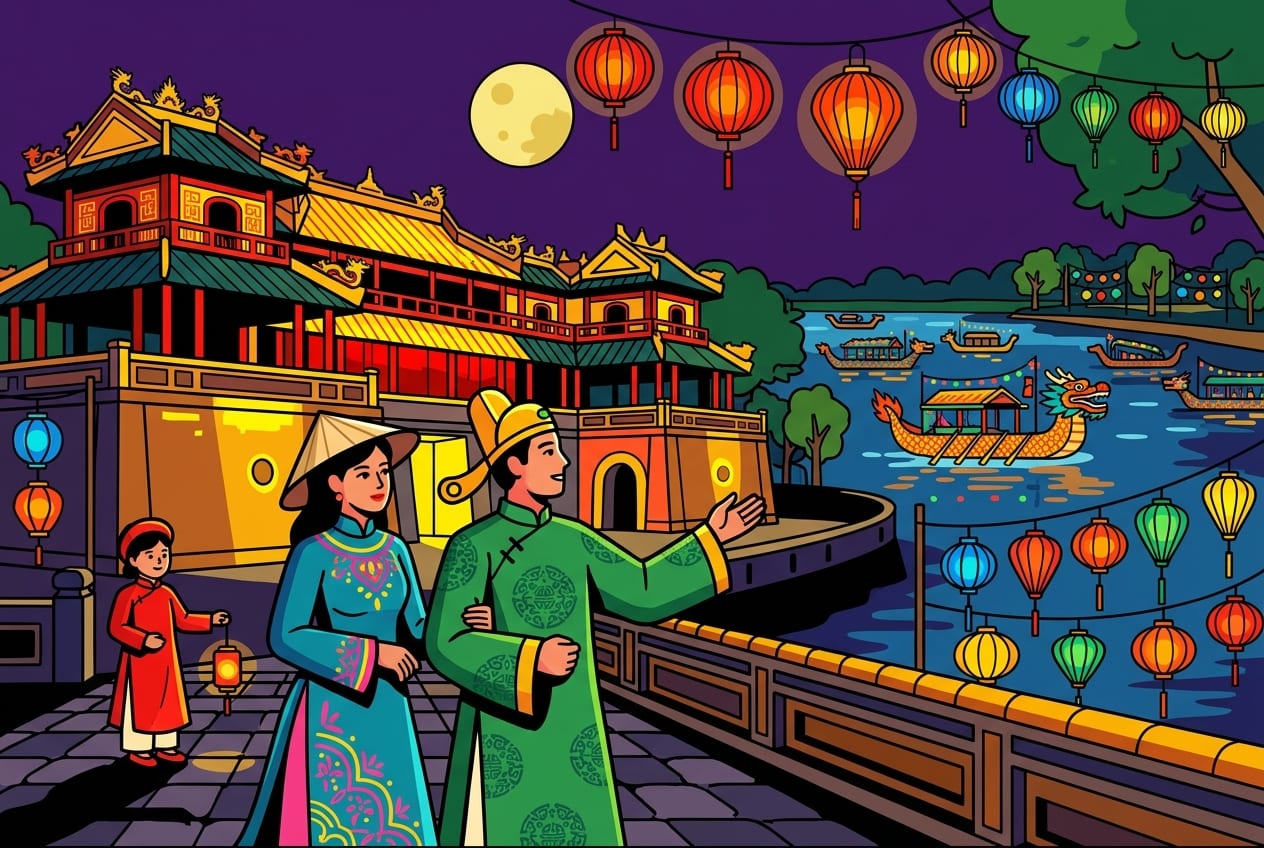
Hue Festival 2026: Time-Traveling to Vietnam's Imperial Heart!
Experience the magic of the 2026 Hue Festival, a year-long celebration of Vietnam's imperial past. From royal court music to dazzling river parades, get ready for an unforgettable cultural immersion in Hue.
By Xinchao team
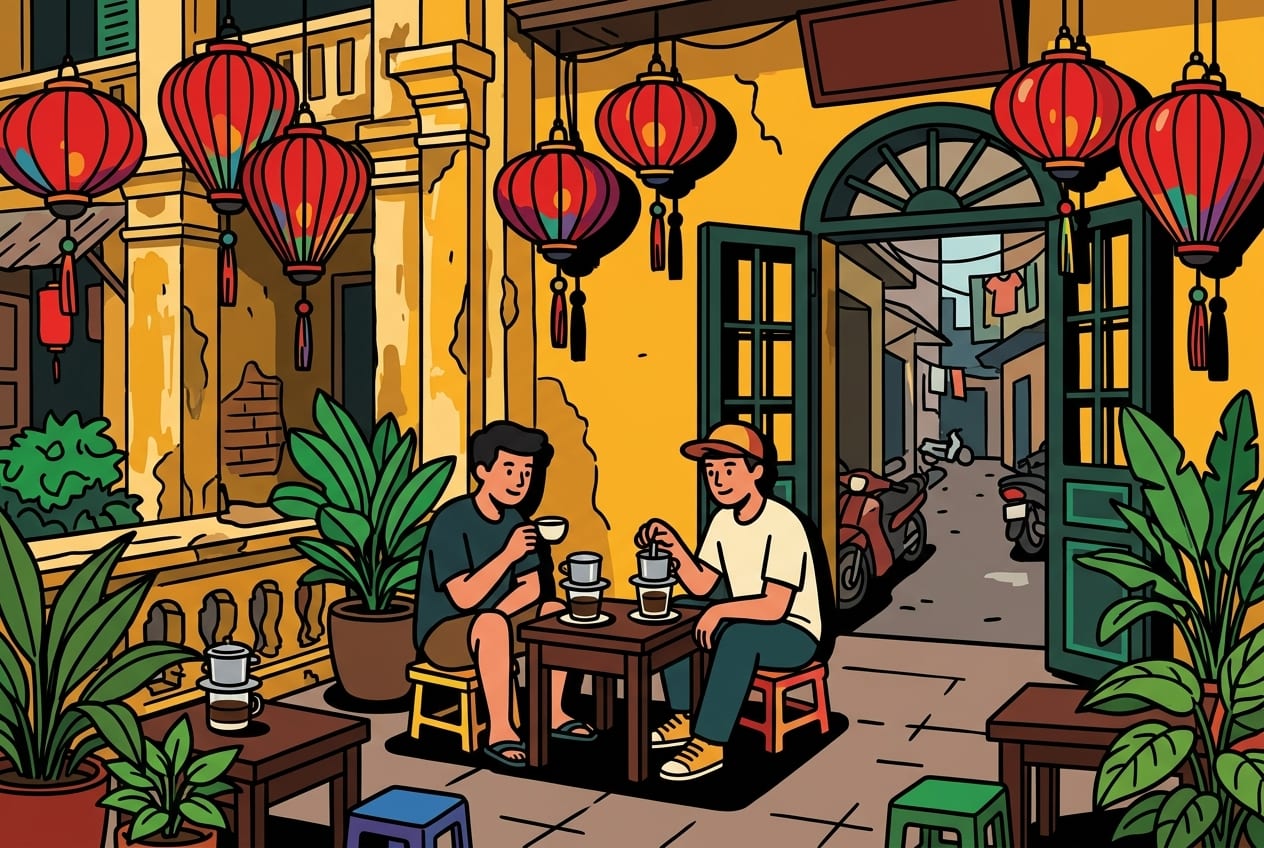
Why Vietnam's 'Heritage Hubs' Are the Hottest New Spots for Culture, Coffee, and Community (And Where to Find Them!)
Vietnam's heritage hubs are buzzing – from ancient towns to repurposed colonial cafes. Discover why these spots are a must-visit for culture, community, and the best slow-drip coffee experiences.
By Xinchao team
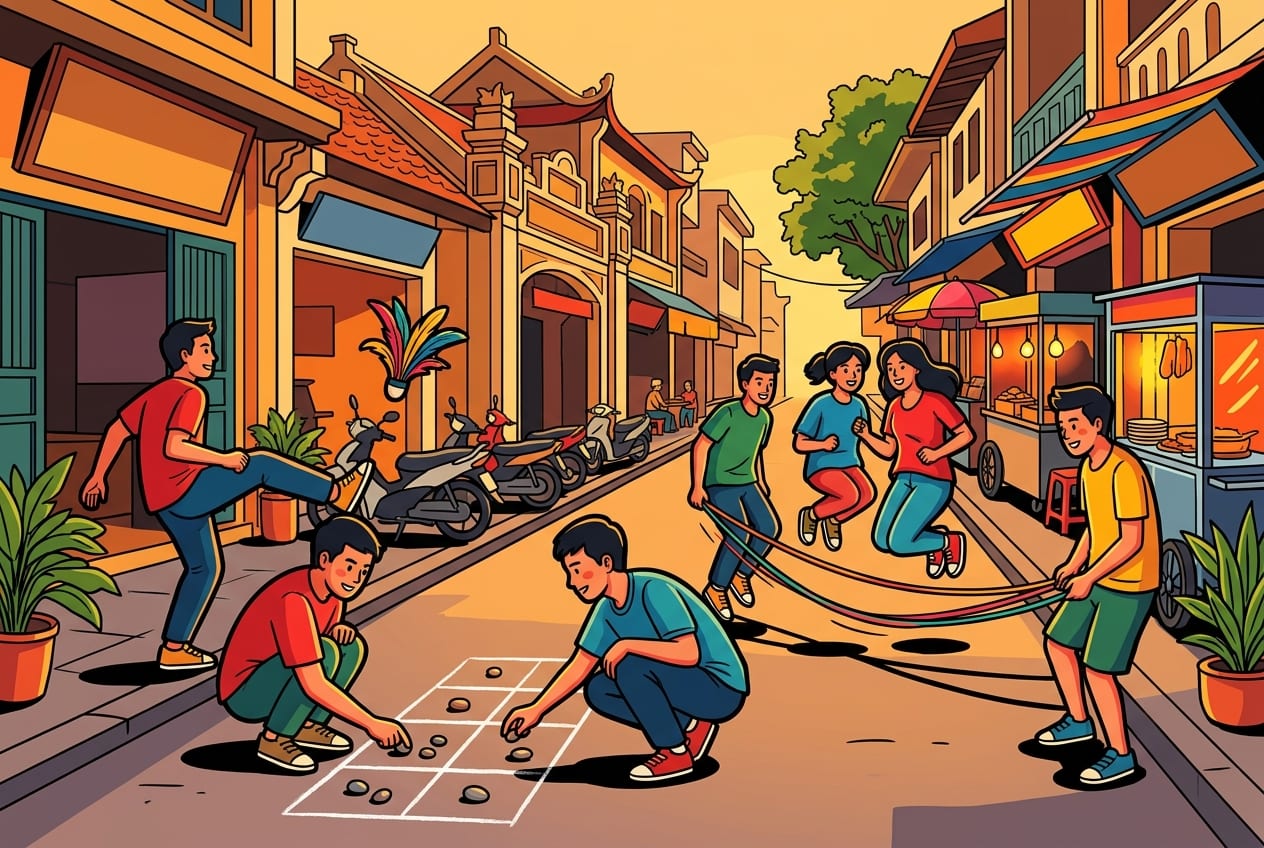
Ditch the TikTok! Why Vietnam's Youth are Rediscovering Ancient Street Games (and You Can Play Too!)
From Hanoi's Hoan Kiem Lake to quiet city alleys, Vietnamese youth are reviving ancient street games. Learn how to join in, connect with locals, and experience a vibrant part of Vietnam's cultural heritage firsthand.