Rice or Noodles: Why Does Vietnam Make You Choose Every Single Day?
Discover the four pillars of Vietnamese cuisine—Cơm, Bún, Thịt bò, and Thịt gà—and learn the cultural secrets behind these essential street food staples.
The Sidewalk Symphony: More Than Just a Meal
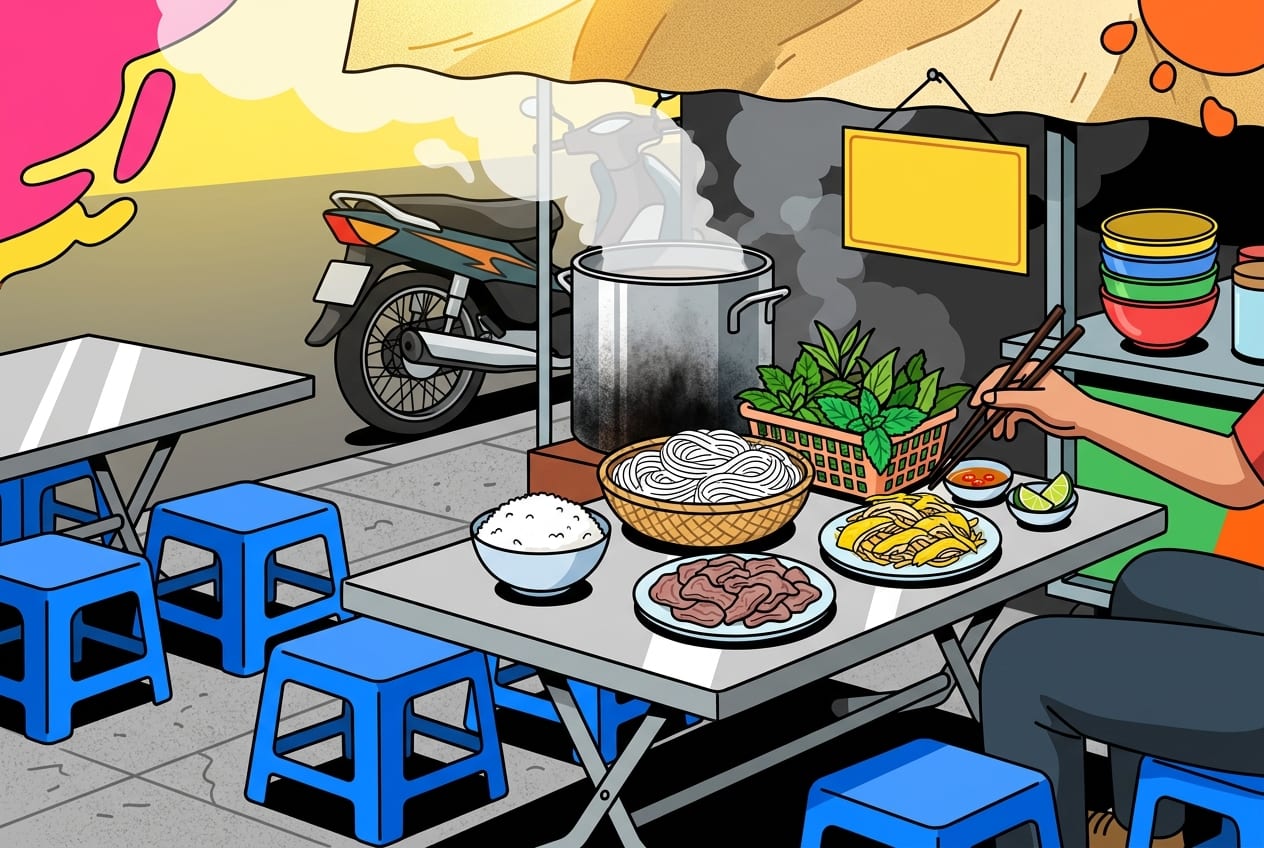
Walking down a street in Hanoi or Saigon, you don't just see people eating; you see a carefully choreographed performance. The stage is a low stainless steel table, the seats are tiny blue plastic stools that make everyone look like they are back in kindergarten, and the music is the sound of motorbikes zooming past. At the center of this scene are four ingredients that hold the entire country together. If you understand these four, you understand the soul of Vietnam. We are talking about rice, rice noodles, beef, and chicken. These aren't just items on a menu; they are the vocabulary of daily life. When a Vietnamese person asks, 'Have you eaten rice yet?' they aren't just asking about your lunch—they are asking if you are doing okay. It is a culture built on the ground, literally and figuratively, where the freshest herbs and the most fragrant steam create a sense of home on every corner.
Cơm: The Unshakable Foundation
Rice is more than just a side dish in Vietnam; it is the heartbeat of every meal. Historically an agrarian society, Vietnamese people view 'cơm' as the essential energy source, while meats and vegetables are considered 'mồi' or 'thức ăn,' items that simply help the rice go down easily and provide flavor to the starch.
In the West, you might say, 'Let's go grab a burger' or 'Let's have pasta.' In Vietnam, the phrase is 'đi ăn cơm'—literally 'go eat rice.' This applies even if you end up eating something else! Rice is the sun around which all other dishes orbit. At a family table, you will see a large pot of fluffy white jasmine rice. Each person has their own small bowl, and they use their chopsticks to pick up a bit of meat or vegetable, dip it in fish sauce, and then tuck it into their rice bowl. You never pour the whole bowl of fish sauce over your rice (that's a rookie move!). Instead, the rice acts as a clean, neutral canvas that balances the salty, spicy, and sour flavors of the 'thức ăn.' It’s about balance—the 'Yin' of the soft, plain rice meeting the 'Yang' of the bold, seasoned toppings.
The Philosophy of the Rice Bowl
The way a person handles their rice bowl reveals their upbringing and social standing in Vietnam. Holding the bowl in your hand rather than leaving it on the table is standard, as it shows respect for the grain and makes it easier to navigate the communal dishes shared by everyone.
When you sit down at a 'Cơm Bình Dân' (commoner's rice) stall, you'll see a display of thirty different dishes. But the first thing the vendor does is scoop a generous mound of steaming rice onto your plate. This rice is often the fragrant 'tám' variety, which smells like pandan leaves and sunshine. Why is it so important? Because rice represents the hard work of the farmers in the Mekong and Red River deltas. To waste a single grain of rice is often seen as a lack of respect for that labor. In a Vietnamese home, the person who scoops the rice for others—usually the youngest or the mother—is performing an act of service that keeps the family connected. It is the literal glue of the society.
Bún: The Versatile Street Star
Rice vermicelli, or 'bún,' offers a lighter, quicker alternative to steamed rice, making it the king of Vietnamese street food. These thin, white strands are fermented slightly to give a unique tang, serving as the perfect base for grilled pork, fresh herbs, and savory broths across the country.
If Cơm is the serious, hardworking father of the food family, Bún is the fun, flexible sister who loves to party. You’ll find Bún everywhere. It’s in 'Bún Chả' (grilled pork with noodles), 'Bún Bò Huế' (spicy beef noodle soup), and 'Bún Riêu' (crab noodle soup). These noodles are made from rice flour, but they are extruded into thin, circular strands and then briefly fermented. This fermentation gives them a very slight sour note that cuts through the fat of grilled meats. When you see a woven bamboo basket filled with white coils of Bún at a street stall, you know you’re in for a treat. It’s the ultimate 'fast food' of Vietnam—slurped down in five minutes while sitting on a sidewalk, yet it’s healthy, fresh, and incredibly satisfying. It doesn't sit heavy in your stomach like bread or heavy pasta, which is vital in the humid tropical heat.
Why We Love the Slurp
Slurping your noodles in Vietnam isn't just about getting the food into your mouth; it's a practical way to cool down the hot broth while aerating the flavors. This audible enjoyment is a sign that the meal is delicious and that the diner is fully immersed in the street food experience.
The texture of Bún is 'soft-chewy' (dai). Vietnamese people are obsessed with texture. A good noodle shouldn't just fall apart; it should have a little bit of bounce. When you eat Bún, you usually get a side basket of herbs—mint, Thai basil, and perilla. You tear these up with your hands and drop them into the bowl. This is the 'why' behind the street food culture: it’s interactive. You aren't just a passive eater; you are a chef at your own table, adjusting the lime, the chili, the herbs, and the noodles to create your perfect bite.
Thịt Bò: From Field to Phở
Beef, once a rare luxury reserved for special occasions or heavy labor, has become a central protein in modern Vietnamese cuisine. Whether it is flash-fried with garlic or simmered for hours in a fragrant Phở broth, 'thịt bò' provides a rich, savory depth that balances the lightness of rice.
In the old days, cows were precious workers in the rice fields, so eating beef was rare. Today, beef is the star of the show. But Vietnamese beef isn't like a thick American steak. It is almost always sliced paper-thin. Why? Because it cooks instantly in a boiling pot of broth (like in Phở Bò) or sears perfectly in a wok with some morning glory vegetables. This thin slicing ensures the meat stays tender and absorbs the flavors of the ginger, star anise, and cinnamon used in the cooking. When you see a plate of raw, pink beef at a stall, watch the vendor. They will take a handful, put it in a mesh strainer, and dip it into the boiling soup for exactly ten seconds. This is 'bò tái'—medium-rare beef that melts in your mouth. It’s a sophisticated way to handle protein, ensuring nothing is overcooked or tough.
Thịt Gà: The Golden Standard
Chicken holds a prestigious place in Vietnamese culture, often serving as the centerpiece for weddings, lunar new year feasts, and family gatherings. Known for its firm texture and bright yellow skin, 'thịt gà' is prized for its natural sweetness and is usually enjoyed shredded in salads or soups.
If you see a chicken in Vietnam with bright yellow skin, don't be alarmed—it's not dyed! This is the sign of a 'Gà Ta' (local chicken) that has been free-roaming and eating natural corn. Vietnamese people actually prefer the meat to be a bit 'chewy' (dai) rather than soft and mushy. They say it has more 'soul.' Chicken is often served shredded (gà xé) because it allows the meat to soak up the lime juice and black pepper dipping sauce. Every part of the chicken is used, from the heart to the feet, because nothing should go to waste. On the street, a bowl of 'Phở Gà' is the lighter, cleaner cousin of the beef version, often eaten in the morning to wake up the senses without feeling too heavy.
The Social Glue: Dipping and Sharing
Eating in Vietnam is a communal act where the arrangement of dishes encourages interaction and shared experience. By placing staples like rice and noodles in the center, diners are invited to dip, wrap, and pass bowls, reinforcing family bonds and social hierarchies through the simple act of eating.
Notice how the table is set. There are no individual plates of food where you stay in your own 'zone.' Everything is in the middle. This forces you to interact. You have to ask someone to pass the lime, or you notice when someone's rice bowl is empty and you offer to refill it. This is the 'why' of Vietnamese dining: it is an exercise in awareness of others. The dipping sauce (nước chấm) is the ultimate symbol of this. Usually, there is one bowl of sauce for the whole table. Everyone dips their spring roll or their slice of boiled chicken into the same amber liquid. It’s a sign of trust and unity. In Vietnam, if you eat alone, people might actually come over and talk to you because eating is meant to be a group activity. The food—the rice, the noodles, the meat—is just the excuse to get together.
Do
- Hold your rice bowl up near your chest while eating; it's more polite and practical.
- Use both hands when passing a bowl or a plate to an elder.
- Try all the herbs provided in the basket; they are there to balance the nutrition and flavor.
- Wait for the eldest person at the table to take the first bite before you start.
Don't
- Don't stick your chopsticks vertically into your rice bowl; it looks like incense sticks at a funeral and is considered bad luck.
- Don't take the 'best' piece of meat for yourself first; offer it to others to show 'nhường nhịn' (courtesy).
- Don't eat directly from the communal serving dish; move the food to your own bowl first.
Why is the chicken skin so yellow in Vietnamese dishes?
This is a sign of 'Gà Ta' or local, free-range chicken. These birds are fed corn and allowed to roam, which naturally turns the skin yellow and makes the meat firmer and more flavorful than industrial white-skinned chicken.
If I am full, can I leave rice in my bowl?
While it's best to finish your rice out of respect for the farmers, it's not a disaster if you leave a little. However, in a traditional home, finishing your bowl is a compliment to the cook and shows you enjoyed the meal.
Can I ask for rice instead of noodles at a Bún stall?
Usually, no. Street stalls in Vietnam are highly specialized. A 'Bún' stall only serves noodles, and a 'Cơm' stall only serves rice. They do one thing and they do it perfectly!
Next time you find yourself perched on a plastic stool, take a second to look at the four pillars on your table. The rice that connects the family, the noodles that fuel the street, the beef that adds the richness, and the chicken that celebrates the occasion. You aren't just eating lunch; you're participating in a thousand-year-old tradition of balance, community, and really, really good flavors. Enjoy the slurp, respect the grain, and don't forget to squeeze that lime!
Topics
Read more
Other posts from our Vietnamese learning blog.
By Xinchao team
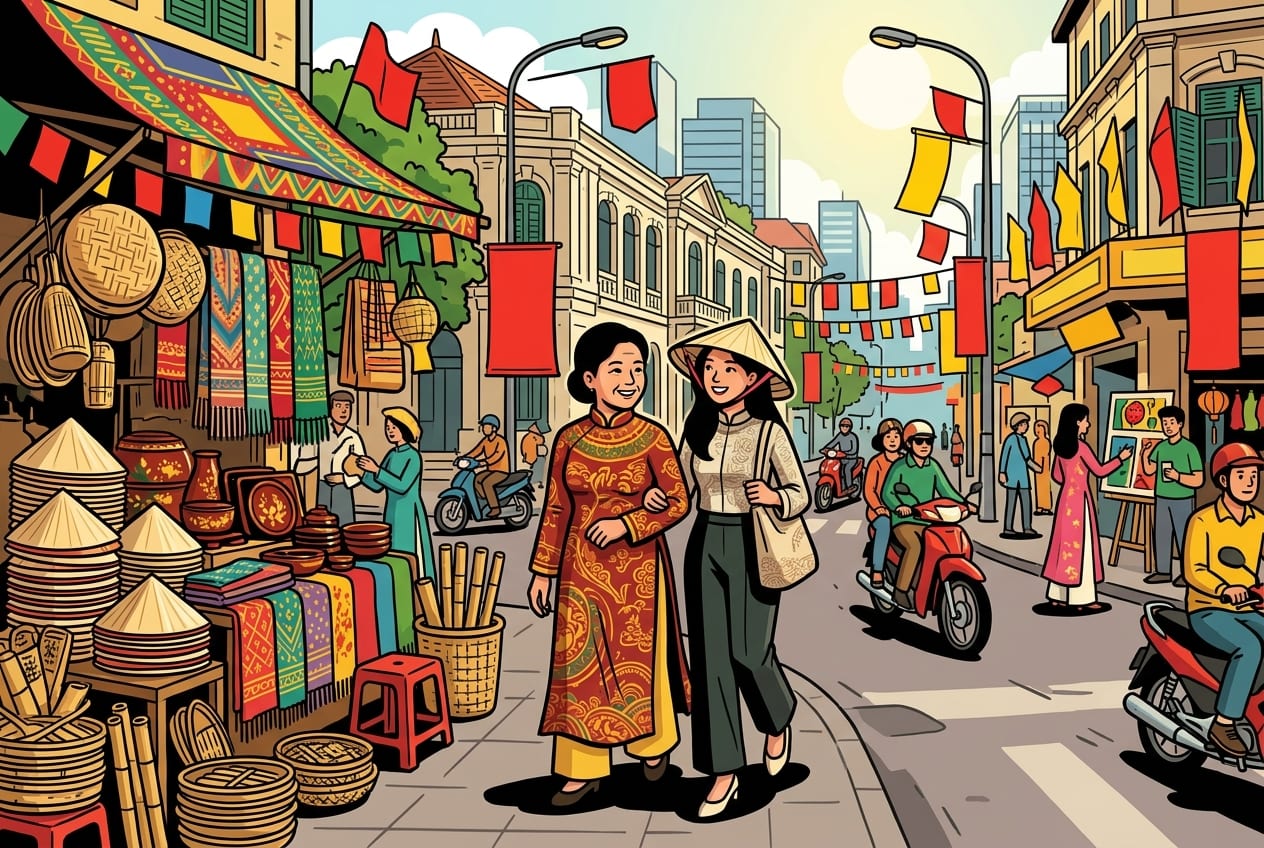
Gặp nhau! Why You Can't Miss Vietnam's First-Ever Culture Day on November 24, 2026!
Mark your calendars! Vietnam's new Culture Day on November 24, 2026, promises a nationwide celebration of heritage. Learn what this "spiritual rendezvous" means for locals and how travelers can dive into unique cultural experiences across the country.
By Xinchao team
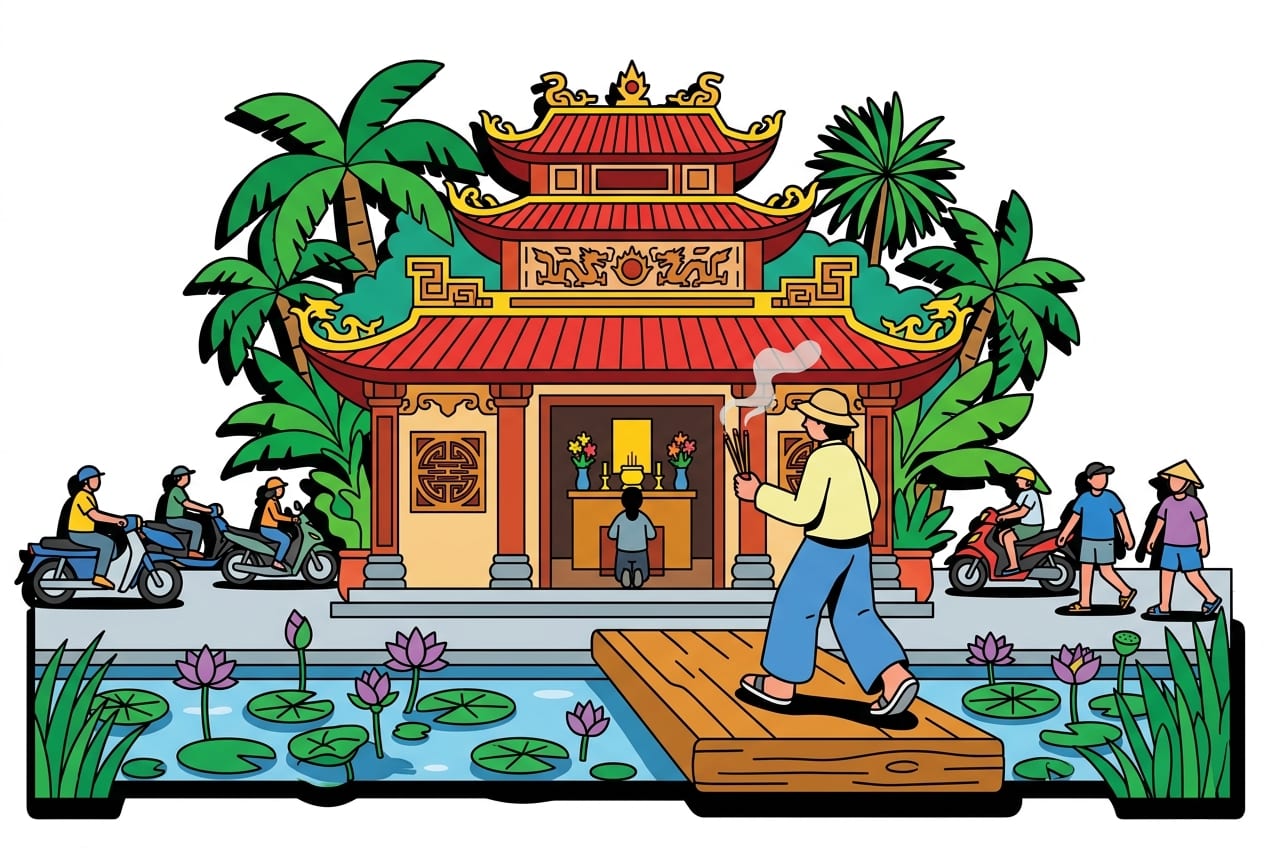
Zen & Lens: Your Guide to Pagoda-Hopping for Peace and Perfect Shots in Vietnam
Ready to explore Vietnam's stunning pagodas? Learn the 'whys' behind local customs, master respectful etiquette, and discover the best spots for breathtaking photos and serene reflection. Your guide to an unforgettable cultural adventure awaits!
By Xinchao team
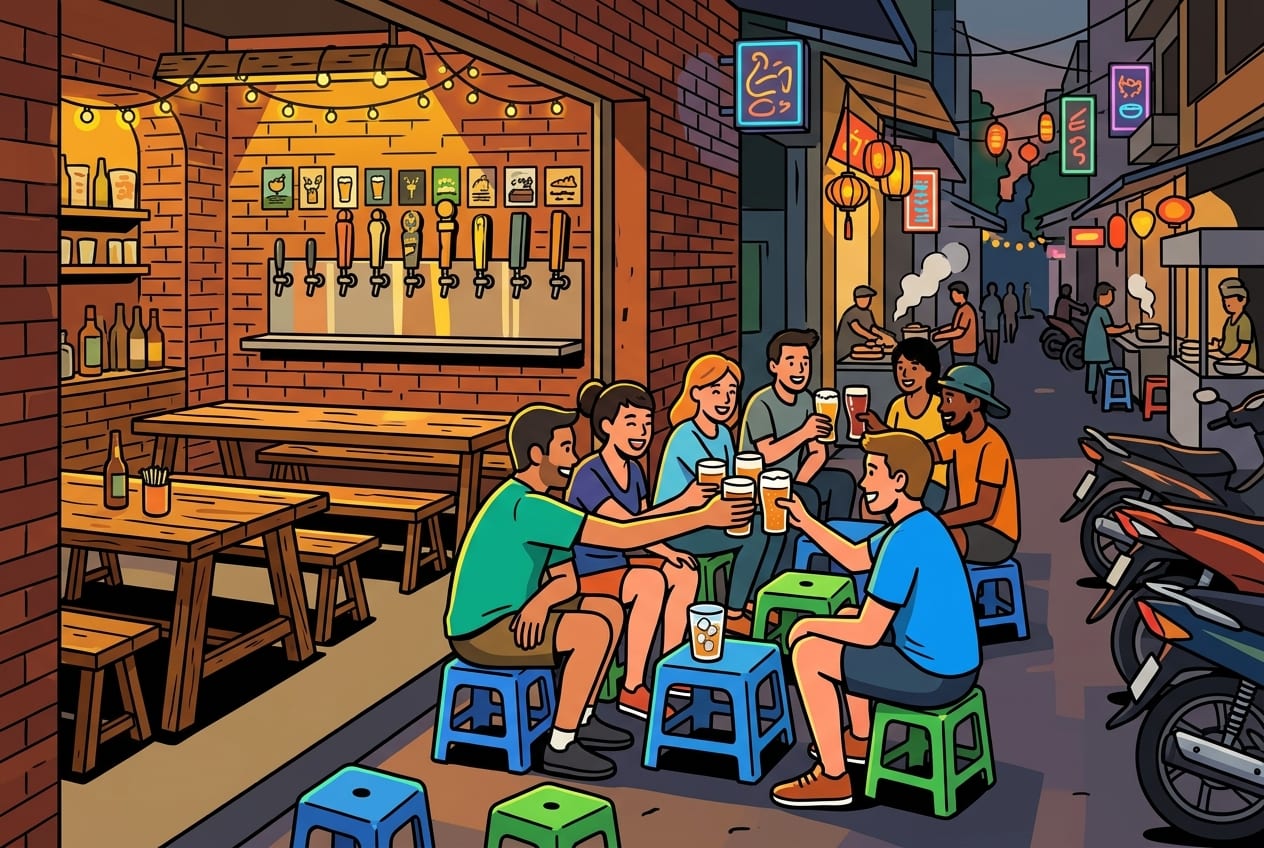
Beyond Bia Hơi: Where the Hops Are Hopping and the Toasts Are Roaring in Vietnam!
From aromatic IPAs to rich coffee stouts, Vietnam's craft beer scene is exploding. Get ready to explore vibrant taprooms, bustling festivals, and master the art of the Vietnamese toast, 'Một, hai, ba, dô!'