Is That a Mango Tree or a Motorbike on Your Balcony? Why Vietnam's Cities are Going Green, One Pot at a Time!
Vietnam's bustling cities are transforming into green oases! Discover why urban farming is booming, from rooftop hydroponics to community gardens, driven by fresh food and cultural roots. Learn how travelers can join the green revolution.
From Concrete Jungles to Green Oases: Vietnam's Unexpected Farm Boom
Picture this: You're weaving through the endless stream of motorbikes in Ho Chi Minh City, past towering apartment blocks and bustling street vendors. Suddenly, you look up and see… a vibrant patch of green, bursting with herbs and leafy vegetables, right on a tiny balcony or a sprawling rooftop! This isn't a mirage. It's Vietnam's urban farming revolution, a fascinating blend of tradition and innovation that's turning concrete spaces into productive, beautiful gardens. But why are city dwellers suddenly trading their scooters for trowels? Let's dig in.
Why the Green Rush? From Food Safety to Family Roots
The surge in urban farming in Vietnam is driven by a deep desire for fresh, safe food, alongside a cultural inclination towards gardening. As cities expand, residents seek to reconnect with nature and ensure the quality of their produce, responding to concerns about conventional agriculture. This movement fosters community bonds and promotes environmental sustainability.
In Vietnam, food is not just sustenance; it's a sacred part of family life and culture. For generations, many Vietnamese families had their own vườn nhà (garden at home) where they grew their daily greens, herbs, and even some fruit. This connection to the land is deeply ingrained. However, rapid urbanization means fewer backyards and more high-rise apartments. Alongside this, a growing awareness of food safety, particularly concerns about pesticide use in commercially grown produce, has fueled a strong desire for clean, traceable food. People want to know exactly what they're eating and where it comes from.
So, what do you do when you miss your vườn nhà but live in a concrete jungle? You make one! From Hanoi's bustling Old Quarter to the modern districts of Ho Chi Minh City, balconies, rooftops, and even small alleyways are being transformed. This isn't just about growing food; it's about reclaiming a piece of tradition, ensuring health for your family, and fostering a sense of community in the urban sprawl. It’s a powerful response to modern challenges, rooted in ancient cultural values. This trend is not unique to Vietnam, but its rapid adoption here showcases a unique blend of practicality and cultural heritage. For instance, urban agriculture projects are gaining traction globally as a response to food insecurity and environmental degradation, as highlighted by organizations like the Food and Agriculture Organization of the United Nations.
More Than Just Basil: The Tech Behind the Green Scene
Urban farming in Vietnam extends beyond simple backyard plots, incorporating advanced technology to maximize output in limited spaces. High-tech solutions like hydroponics and IoT-controlled systems are increasingly common on city rooftops, boosting the production of leafy greens and herbs. Cooperatives and agricultural parks actively support these innovative, sustainable practices.
While many urban gardens are charmingly simple – think repurposed plastic bottles and Styrofoam boxes holding chili plants or morning glory – others are surprisingly high-tech. In cities like Ho Chi Minh City, cooperatives such as Tuan Ngoc Hydroponic Vegetable Cooperative are leading the charge. They're using advanced hydroponic systems (growing plants in water, not soil) and IoT (Internet of Things) technology to monitor and control everything from nutrient levels to light exposure. This means more produce in smaller spaces, with less water! Tam Nong Vietnam Cooperative offers similar effective models, proving that even a tiny balcony can become a productive farm.
The city's Agricultural Hi-Tech Park (AHTP) is actively supporting this movement, incubating agritech firms and promoting organic and circular production. This fusion of ancient farming wisdom with modern technology shows Vietnam's commitment to both tradition and progress. It's not just about growing food; it's about building a sustainable future for urban living, ensuring that cities can feed themselves, even as they grow. This approach is gaining global recognition, with cities worldwide exploring innovative solutions to integrate agriculture into urban planning, as documented by sources like Smart Cities World.
Digging In: How Travelers Can Get Their Hands Dirty (Literally!)
For travelers, Vietnam offers unique opportunities to experience urban farming firsthand, moving beyond observation to active participation. Engaging in farm-to-table experiences, from planting to cooking, provides an authentic cultural immersion. These activities support sustainable tourism and local livelihoods, connecting visitors directly with Vietnam's green revolution.
If you're tired of just seeing food and want to understand where it comes from, Vietnam's urban and peri-urban farming scene offers incredible hands-on experiences. It’s a fantastic way to connect with local culture, learn about sustainable practices, and even get a little muddy! Instead of just ordering your pho, imagine harvesting the fresh herbs that go into it.
Tra Que: The OG of Green Tourism
Near Hoi An, Tra Que Vegetable Village is a prime example of an established organic farming community that welcomes visitors. Recognized by UN Tourism, it offers immersive 'farmer for a day' experiences. Guests learn traditional farming methods, participate in harvesting, and enjoy cooking classes with freshly picked produce, providing a genuine cultural and culinary adventure.
Just a short bike ride from the ancient town of Hoi An, Tra Que Vegetable Village is legendary. It's not strictly 'urban' but a perfect example of how farming integrates into the local lifestyle, even near a bustling tourist hub. Here, you can literally become a 'farmer for a day.' You'll learn how to prepare soil, compost, use natural pest control, and harvest seasonal vegetables. Many experiences culminate in a cooking class where you use the very ingredients you just picked – talk about farm-to-table! Tra Que's dedication to organic farming and community engagement even earned it recognition as a UN Tourism Best Tourism Village 2024. This is a must-do for anyone interested in the roots of Vietnamese cuisine and sustainable living. You'll understand why the fresh herbs are so vital to every dish, whether it's Rice or Noodles: Why Does Vietnam Make You Choose Every Single Day?.
Beyond Tra Que, places like An Nong Organic Farm near Da Nang offer similar workshops focused on organic agriculture and wellness. If you're in the capital, 'Hanoi agricultural study tours' can take you just outside the city to rural farming villages. Here, you can get hands-on with rice paddies, vegetable farms, and learn about traditional permaculture models known as VAC (Vườn-Ao-Chuồng – Garden-Pond-Livestock pen), a holistic approach to sustainable living. These tours often include cycling through picturesque villages and visiting local craft workshops, giving you a comprehensive taste of rural Vietnamese life.
The Look and Feel: A Concrete Jungle with a Green Heartbeat
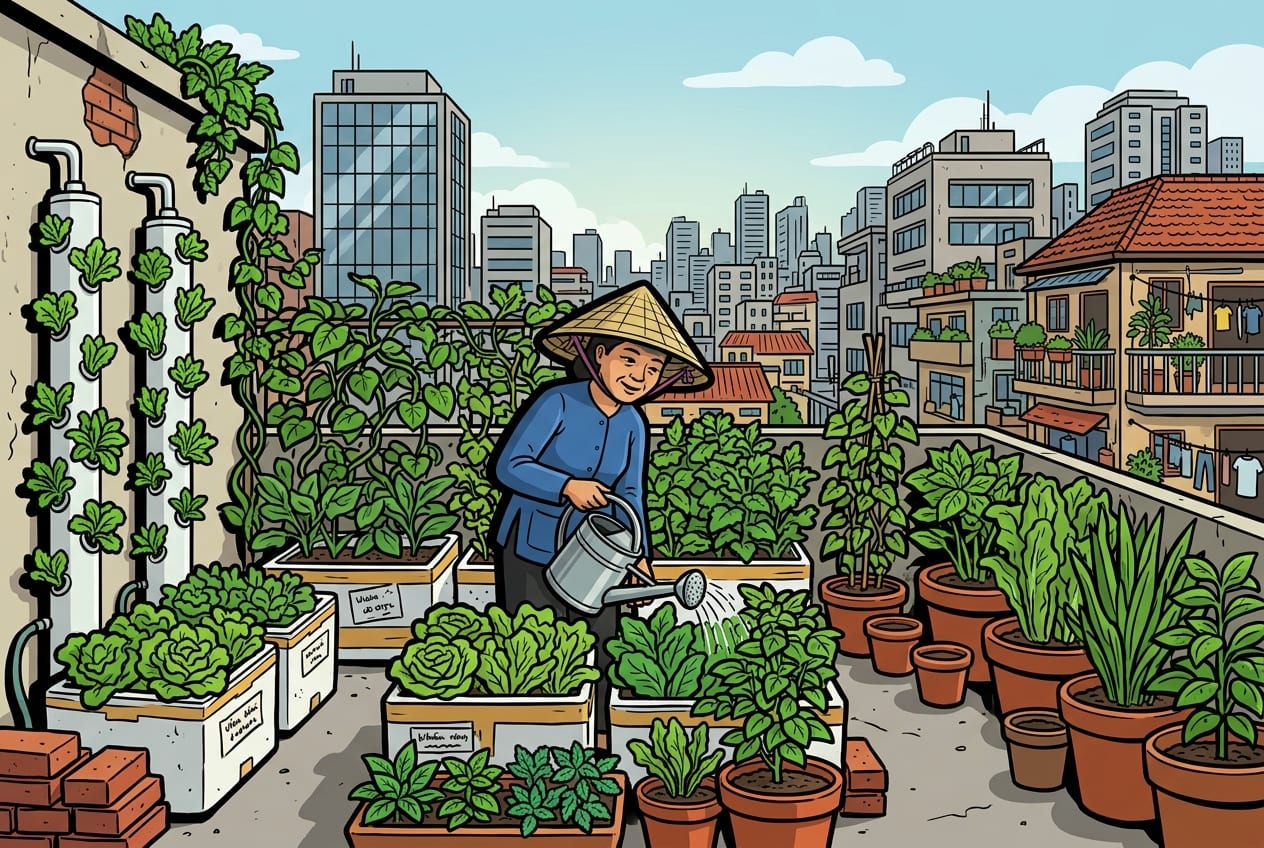
Visually, urban farming in Vietnam is a testament to resourcefulness, blending lush greenery with the urban environment. You'll see plants thriving in various containers, from repurposed items to vertical towers, often tended by farmers in traditional attire like the Ao Ba Ba and Non La. This vibrant scene juxtaposes modern cityscapes with natural oases under the tropical sky.
Walking through Vietnamese cities, these green spaces are a delightful contrast to the concrete and motorbikes. You’ll see ingenious setups: rows of vibrant green lettuce in repurposed Styrofoam boxes on a balcony railing, vertical hydroponic towers scaling apartment walls, or neatly arranged raised beds on rooftops, bursting with basil, mint, and cilantro. The dominant colors are, naturally, the lush greens of various vegetables and herbs, complemented by the earthy browns of soil and simple wooden structures. Often, you'll spot hints of red from terracotta pots or the characteristic red-tiled roofs that dot the cityscape.
Farmers, whether young city dwellers or older villagers, often wear simple, practical clothing. The áo bà ba (a collarless, often brightly colored shirt) paired with the iconic conical nón lá (palm leaf hat) is a common sight, offering protection from the tropical sun and occasional downpours. The air carries a mix of urban aromas – exhaust fumes, street food, and sometimes the sweet scent of blooming flowers – but in these green oases, you'll catch the refreshing fragrance of fresh herbs and damp earth. It's a sensory experience that truly highlights the resilience and creativity of the Vietnamese people.
Do
- Do ask permission before taking photos, especially of people. A friendly smile and gesture usually work.
- Do wear comfortable, modest clothing suitable for outdoor activities, and bring sun protection (hat, sunscreen).
- Do be respectful of the farmers' time and knowledge. Listen attentively and engage with genuine curiosity.
- Do try the fresh produce! Many tours include a meal or tasting, offering the freshest flavors you'll find.
Don't
- Don't wander off by yourself in active farming areas; stay with your guide or group.
- Don't pick or taste anything without asking first. Some plants might not be edible or are part of an ongoing harvest.
- Don't expect luxury facilities; these are working farms, so embrace the rustic charm and simplicity.
Can I buy fresh produce directly from these urban farms or cooperatives?
Yes, many urban farms and cooperatives, especially those focused on community engagement or hi-tech production, offer direct sales. Places like Tuan Ngoc Hydroponic Vegetable Cooperative in Ho Chi Minh City or smaller community gardens often have stalls or delivery services for their fresh, safe produce. It's best to check their websites or inquire locally, as availability and sales methods can vary. Buying directly supports local farmers and ensures you get the freshest ingredients.
Are urban farming tours in Vietnam suitable for children?
Absolutely! Urban farming tours, particularly those in places like Tra Que Vegetable Village or the Hanoi agricultural study tours, are fantastic for children. They offer a hands-on, educational experience that connects kids with nature and teaches them about where their food comes from. The activities, like planting, watering, and harvesting, are often engaging and interactive, making it a memorable and fun learning adventure for the whole family. Just ensure the tour operator can accommodate younger participants.
From humble basil pots on balconies to sophisticated hydroponic systems on rooftops, Vietnam's urban farming movement is a vibrant testament to resilience, innovation, and a deep-seated cultural connection to the land. It’s a trend that feeds both bodies and souls, offering fresh produce, fostering community, and providing a green escape within the bustling city. For travelers, it’s an invitation to look beyond the usual tourist spots and truly "dig in" to the heart of Vietnamese life, one delicious, home-grown leaf at a time. So next time you're in a Vietnamese city, remember to look up – you might just spot your next meal growing in the sky!
Practise the words you just read
Vietnamese phrases for real situations, each with native audio in both accents.
Topics
Read more
Other posts from our Vietnamese learning blog.

By Xinchao team
Hue Festival 2026: Time-Traveling to Vietnam's Imperial Heart!
Experience the magic of the 2026 Hue Festival, a year-long celebration of Vietnam's imperial past. From royal court music to dazzling river parades, get ready for an unforgettable cultural immersion in Hue.

By Xinchao team
The Yellow Tent on the Street: A Respectful Guide to Attending a Vietnamese Funeral
An essential guide to navigating a Vietnamese funeral (đám tang) with respect, covering dress codes, condolence envelopes, and key cultural taboos.
By Xinchao team
Why Vietnam's 'Heritage Hubs' Are the Hottest New Spots for Culture, Coffee, and Community (And Where to Find Them!)
Vietnam's heritage hubs are buzzing – from ancient towns to repurposed colonial cafes. Discover why these spots are a must-visit for culture, community, and the best slow-drip coffee experiences.