Is Your Vietnamese Textbook Lying to You? Decoding Gen Z Slang on the Sidewalk
Unlock the secrets of Vietnamese Gen Z slang! Learn why phrases like 'U là trời' and 'Ét ô ét' are taking over the streets and how to use them like a local.
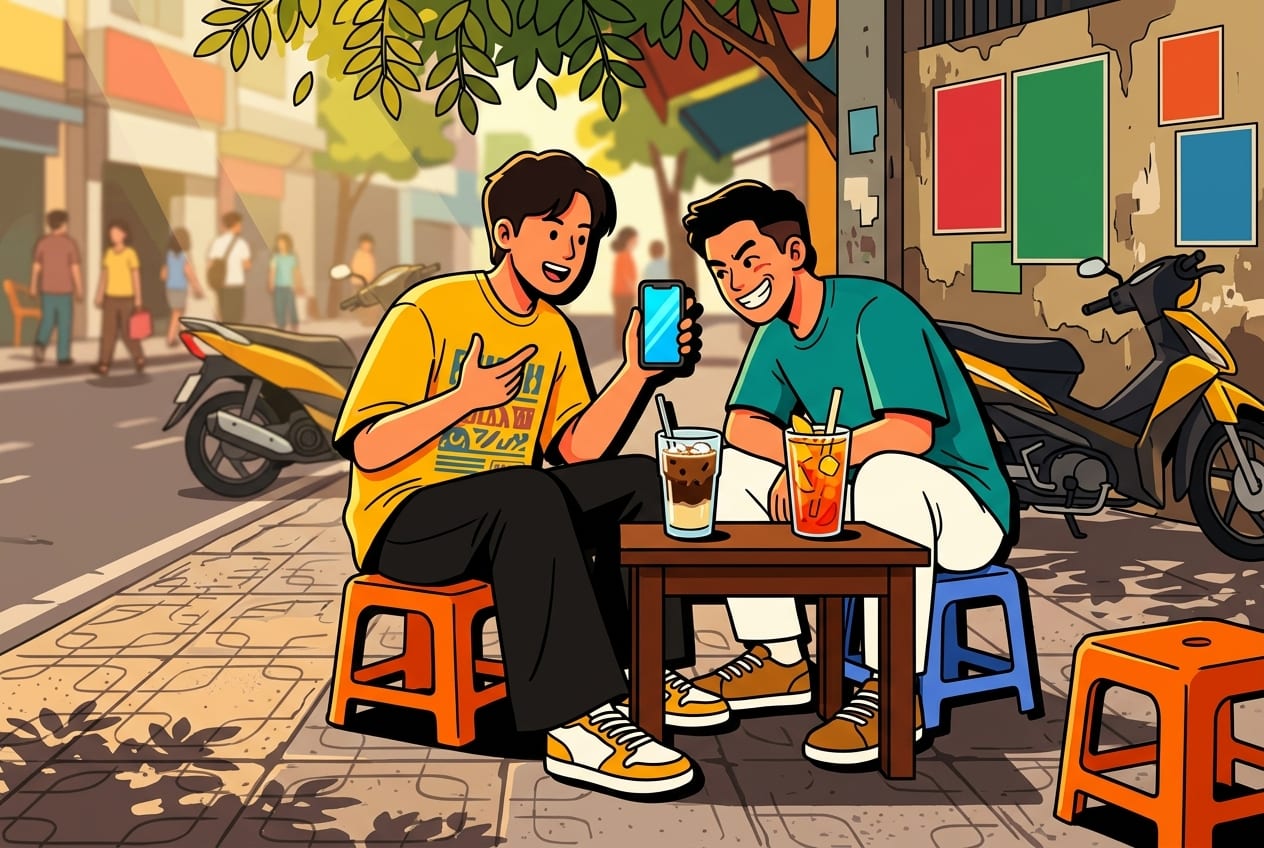
If you have been studying Vietnamese for a few months, you probably know how to say 'Xin chào' and 'Cảm ơn.' You might even be proud of your ability to distinguish between 'bún chả' and 'bún cá.' But then, you sit down at a bustling sidewalk cafe in Saigon or Hanoi, and suddenly, you feel like you are listening to a completely different language. You hear a group of stylish teenagers laughing over their iced coffees, shouting things like 'U là trời!' or 'Ét ô ét!' while staring at a smartphone screen. You check your textbook. These words aren't there. You check your dictionary. Nothing. Welcome to the world of Vietnamese Gen Z slang, a linguistic 'storm' that is moving faster than a motorbike in rush hour.
Vietnam has a famous proverb: 'Phong ba bão táp không bằng ngữ pháp Việt Nam.' This translates to 'The storms and tempests of nature are nothing compared to the complexity of Vietnamese grammar.' Historically, this referred to the country's intricate system of pronouns and tones. However, today’s youth—the digital natives known as Gen Z—have taken this 'storm' to a whole new level. They are reinventing the language daily, blending English loanwords, phonetic puns, and internet memes into a colorful dialect that reflects the energy of modern Vietnam. To understand this language is to understand the heart of the new generation.
The Modern 'Storm' of Vietnamese Grammar
Modern Vietnamese slang evolves rapidly because Gen Z uses the language's tonal flexibility to create puns and abbreviations. This 'storm' of words reflects a fast-paced digital culture where young people want to express unique identities, often blending traditional grammar with internet-inspired humor and English loanwords to stay connected with global trends while remaining uniquely Vietnamese.
In the past, Vietnamese social etiquette was strictly defined by 'Kính trên nhường dưới' (respect elders, yield to juniors). While this remains the foundation of society, language has become a playground where young people can temporarily escape these rigid structures. By creating their own 'code,' Gen Z creates a sense of belonging. If you know the slang, you are part of the 'in-group.' This is especially visible in the 'vỉa hè' (sidewalk) culture. Picture the scene: low wooden tables, iconic blue and red plastic stools, and the smell of 'cà phê sữa đá' (iced coffee with condensed milk) mixing with the exhaust of passing motorbikes. This is where the language is born.
Young people gather here, dressed in oversized graphic t-shirts and wide-leg trousers, leaning in to look at a TikTok video. When something shocking happens on the screen, they don't just say 'Oh my god.' They say something much more creative. They take the sounds of the traditional language and twist them, making them softer, funnier, or more dramatic. This linguistic creativity is a way for the youth to reclaim their culture in a world that is becoming increasingly globalized.
'U là trời' and the Art of Exaggeration
This phrase is a playful variation of 'Trời ơi,' used to express extreme surprise, shock, or admiration. By adding a melodic twist to a traditional exclamation, Gen Z makes their reactions sound more dramatic and trendy, proving how old expressions can be rebranded for a modern, social-media-driven audience.
If you spend ten minutes at a trendy cafe, you will hear 'U là trời' (pronounced like 'oo lah choy') at least five times. It is the ultimate Swiss Army knife of slang. Did your friend just get a new haircut? 'U là trời!' Did the waiter bring out a vibrant fruit tea that looks perfect for Instagram? 'U là trời!' It is a variation of the classic 'Trời ơi' (Oh my God), but the addition of the 'là' makes it sound more rhythmic and 'Gen Z.' It is a perfect example of how young Vietnamese people love to play with the sounds of their language to make it more expressive.
Another favorite is 'Ét ô ét.' If you say this out loud, it sounds like the English letters 'S.O.S.' It originated from a viral clip of an older woman trying to say S.O.S., and the youth immediately turned it into a meme. Now, it is used for any minor 'crisis.' Forgot your wallet? 'Ét ô ét!' Your crush liked your photo? 'Ét ô ét!' It’s a way of being melodramatic and funny at the same time, showing that the speaker doesn't take themselves too seriously. This self-deprecating humor is a hallmark of modern Vietnamese social interaction.
Why Slang Matters in Vietnamese Society
Slang in Vietnam serves as a social glue, allowing young people to create a shared sense of belonging and humor. By using these coded terms, Gen Z navigates social hierarchies playfully, often softening the blow of stressful situations or showing off their awareness of global trends and local memes.
To an outsider, slang might seem like just 'lazy' speaking. But in Vietnam, it is deeply tied to the concept of 'Face' and social harmony. In a culture where you are often expected to be polite and reserved, slang provides a 'safe space' to be loud and expressive. When a young person uses a word like 'chằm kẽm' (a play on 'trầm cảm' meaning depressed), they aren't necessarily saying they are clinically sad. Instead, they are using a 'cute' version of a heavy word to express that they are stressed out by exams or work. It makes the struggle feel lighter and more relatable to their peers.
This use of language also bridges the gap between the digital world and the physical world. Vietnamese Gen Z spends a lot of time on Facebook and TikTok. When a phrase goes viral online, it appears on the sidewalks the very next day. This rapid adoption shows how connected the youth are. They aren't just consumers of culture; they are the creators. By using slang, they are signaling to each other that they are 'up to date' with the latest trends, which is a vital part of social status in the modern urban landscape.
The 'Flexing' Culture and Social Media
The term 'flexing' has been adopted into Vietnamese youth culture to describe showing off wealth or achievements. However, it is often used ironically or humorously on social media to build rapport. This shows how English loanwords are adapted to fit the local context of self-expression and digital social status.
You might hear the English word 'Flex' used constantly in Vietnamese conversations now. There was even a massive Facebook group called 'Flex đến hơi thở cuối cùng' (Flexing until the last breath). In the West, 'flexing' is often seen as arrogant. But in Vietnam, Gen Z has turned it into a game. People 'flex' about their good grades, their weird talents, or even their famous distant relatives. It is a way of celebrating success in a society that traditionally values modesty.
Another popular term is 'mlem mlem.' It started as an onomatopoeia for a cat licking water, but it quickly evolved. Now, young people use it to describe delicious food or someone they find very attractive. If you see a photo of a beautiful bowl of 'Phở' on social media, you might see 'mlem mlem' in the comments. It’s playful, slightly cheeky, and very Gen Z. It shows how the language is becoming more visual and sensory, moving away from formal descriptions to immediate, gut-level reactions.
Coffee Shops as Language Labs
Sidewalk cafes are the primary social laboratories where Vietnamese slang is born and tested. In these informal settings, the lack of rigid social structures allows for creative language play, as friends gather over iced coffee to share digital memes and translate them into spoken language in real-time.
If you want to see this language in action, go to a 'cà phê bệt' (sidewalk coffee where people sit on the ground or low stools). The atmosphere is energetic and contemporary. You'll see motorbikes parked haphazardly on the pavement, textured walls decorated with colorful posters, and dappled shadows from the trees dancing on the ground. This is the 'office' of the Vietnamese youth. Here, the hierarchy of the home or the workplace disappears.
In these spaces, language is fluid. You might hear 'Gét gô!' which is a phonetic way of saying 'Let's go!' It became a trend after a TikToker used it to challenge himself to do silly things. Now, it's a call to action for anything—from going to get a snack to starting a study session. The cafe is where these words are polished. One person says it, the others laugh and repeat it, and suddenly, a new word is added to the local vocabulary. It is a living, breathing process that happens every single afternoon over glasses of tea and coffee.
How to Use Slang Without Losing Your 'Face'
Understanding when to use slang is crucial for maintaining social harmony and 'saving face' in Vietnam. While slang is perfect for casual settings with peers, using it with elders or in formal environments can be seen as disrespectful. Proper etiquette requires balancing modern trends with traditional respect for hierarchy.
As a traveler or a learner, you might be tempted to jump in and start 'flexing' or shouting 'U là trời.' But be careful! Vietnamese culture is still very much about 'context.' Using Gen Z slang with a 70-year-old grandmother might result in a confused look or even be seen as a lack of education. Slang is for peers. It is the language of friendship and equality.
If you use it correctly, however, it is a fantastic 'icebreaker.' Vietnamese people are generally very proud of their language and are delighted when foreigners take the time to learn the 'real' way people talk. A well-placed 'mlem mlem' when a street food vendor hands you a skewer of grilled pork will likely earn you a huge smile and maybe even an extra skewer. It shows that you aren't just a tourist; you are someone who is paying attention to the culture as it exists today.
Navigating the Generational Gap
The generational gap in Vietnam is often visible through language, as older people may find Gen Z slang confusing or even 'ruining' the language. However, this tension also creates opportunities for cross-generational teaching, where young people explain modern culture to their parents, bridging the divide through shared laughter.
There is a funny tension in Vietnamese households today. Parents often complain that they can't understand what their children are saying. They see words like 'tới công chuyện' (literally 'coming to business,' but used to mean 'here we go/trouble is coming') and wonder why the youth can't just speak 'normally.' But this is a sign of a healthy, evolving society. Vietnam has changed more in the last 30 years than in the previous 300. The language has to change to keep up.
This 'language war' is usually lighthearted. You will often see a teenager patiently explaining a meme to their aunt or uncle, leading to a moment of shared laughter. It is a way for the older generation to stay connected to the fast-moving world of their children. By learning these words, you aren't just learning 'slang'; you are learning the tools that Vietnamese people use to navigate a world that is changing right before their eyes.
Do
- Use 'U là trời' when you see something amazing, shocking, or beautiful.
- Observe the age and social status of the person you are talking to before using slang.
- Smile and use a playful, lighthearted tone when trying out Gen Z terms.
- Ask young locals what the latest 'hot' word is—they love to teach visitors!
Don't
- Don't use 'mlem mlem' or other slang in serious business meetings or with elderly people.
- Don't assume every young person knows every single internet meme; some are very niche.
- Don't worry if your pronunciation isn't perfect; the effort to speak 'modern' Vietnamese is highly appreciated.
- Don't use slang if you are trying to be formal or respectful in a traditional setting.
Why do young Vietnamese people use 'Ét ô ét' (S.O.S) for small problems?
It’s a form of 'internet humor' that started from a viral video. Gen Z uses it ironically to be dramatic about minor inconveniences, like running out of bubble tea or having too much homework. It's not a real emergency call!
Can I use these slang words with a taxi driver or a street food vendor?
It depends on their age. If they look like they are under 30, they will probably find it funny and cool. If they are older, it's better to stick to standard, polite Vietnamese to show respect.
Is 'mlem mlem' considered rude?
Not usually, but it is very casual and slightly 'flirty' or cheeky. It's perfectly fine to use for food with friends, but avoid using it to describe people unless you are in a very close, informal social circle.
Practise the words you just read
Vietnamese phrases for real situations, each with native audio in both accents.
Topics
Read more
Other posts from our Vietnamese learning blog.
By Xinchao team
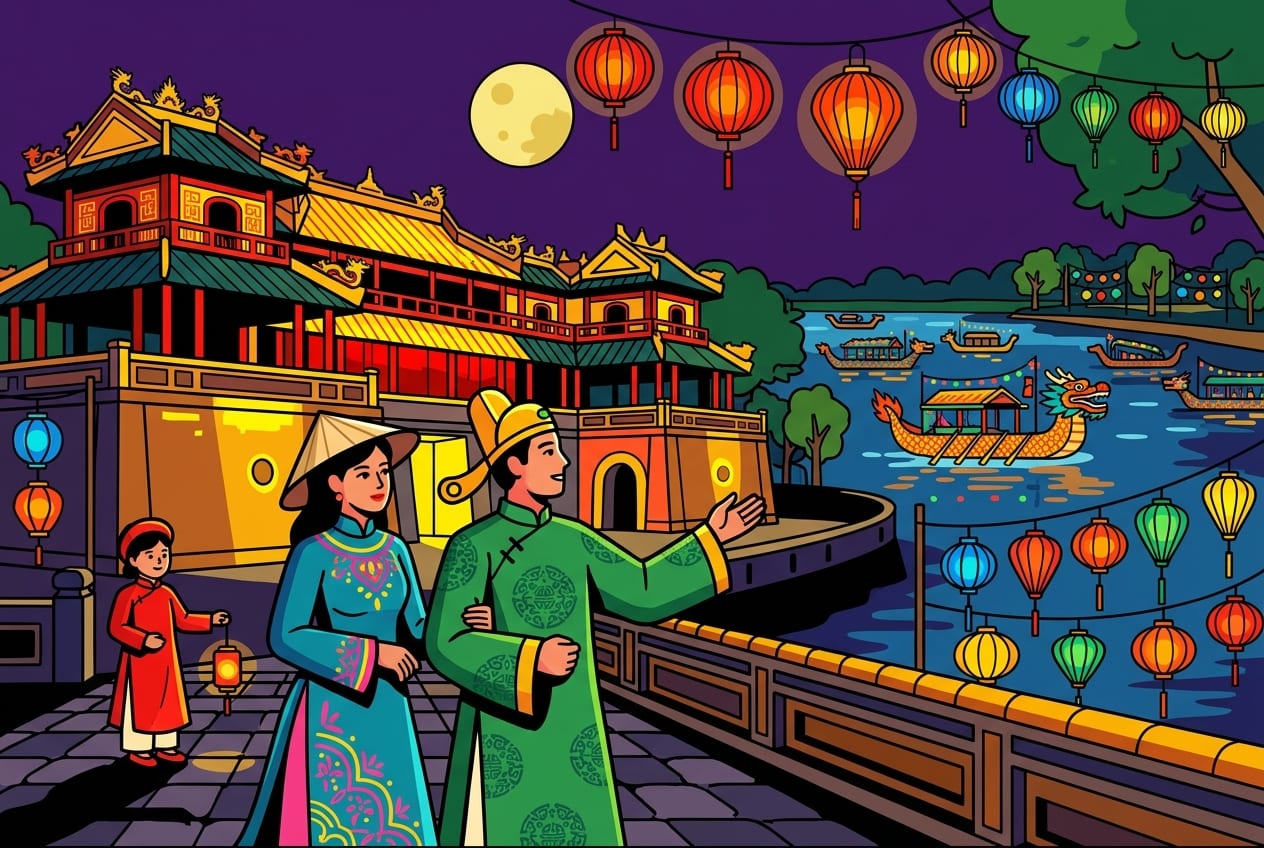
Hue Festival 2026: Time-Traveling to Vietnam's Imperial Heart!
Experience the magic of the 2026 Hue Festival, a year-long celebration of Vietnam's imperial past. From royal court music to dazzling river parades, get ready for an unforgettable cultural immersion in Hue.
By Xinchao team
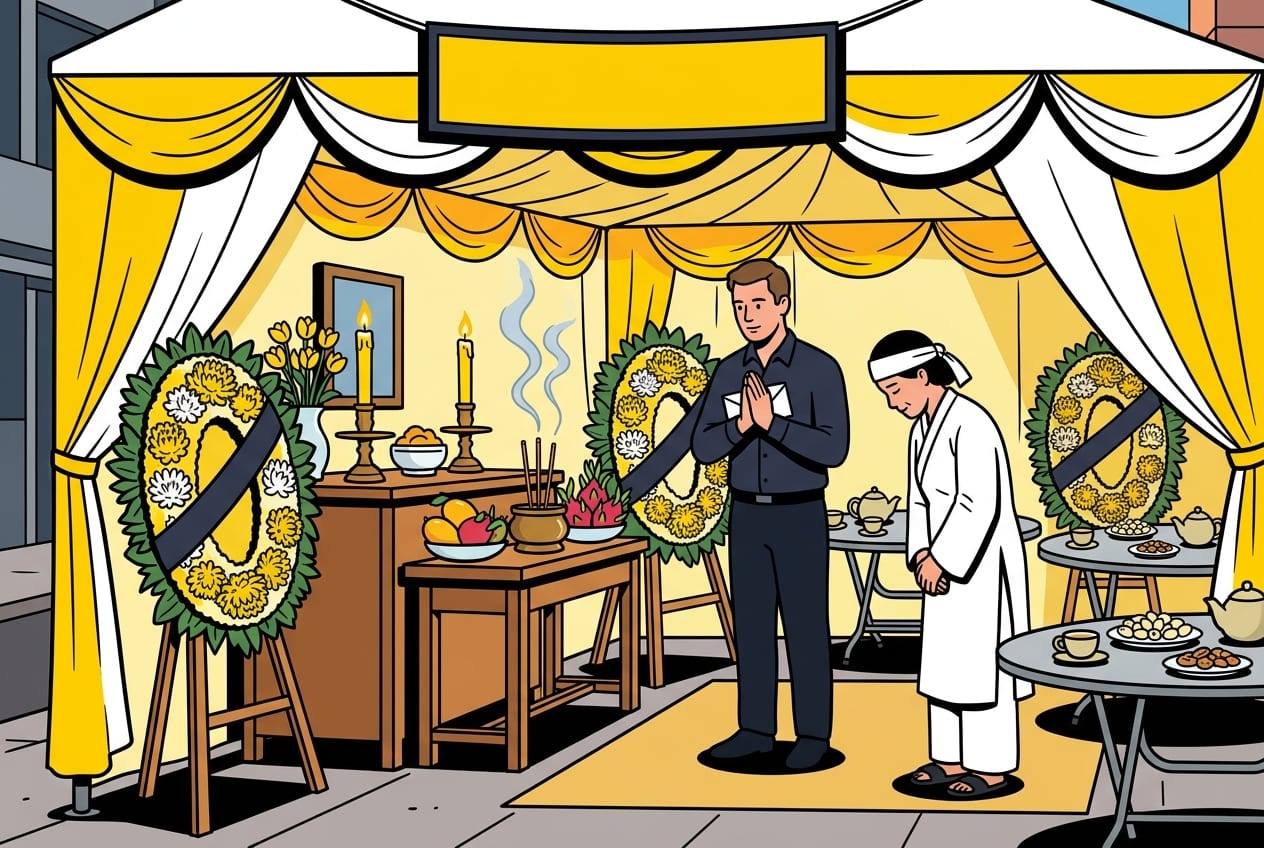
The Yellow Tent on the Street: A Respectful Guide to Attending a Vietnamese Funeral
An essential guide to navigating a Vietnamese funeral (đám tang) with respect, covering dress codes, condolence envelopes, and key cultural taboos.
By Xinchao team
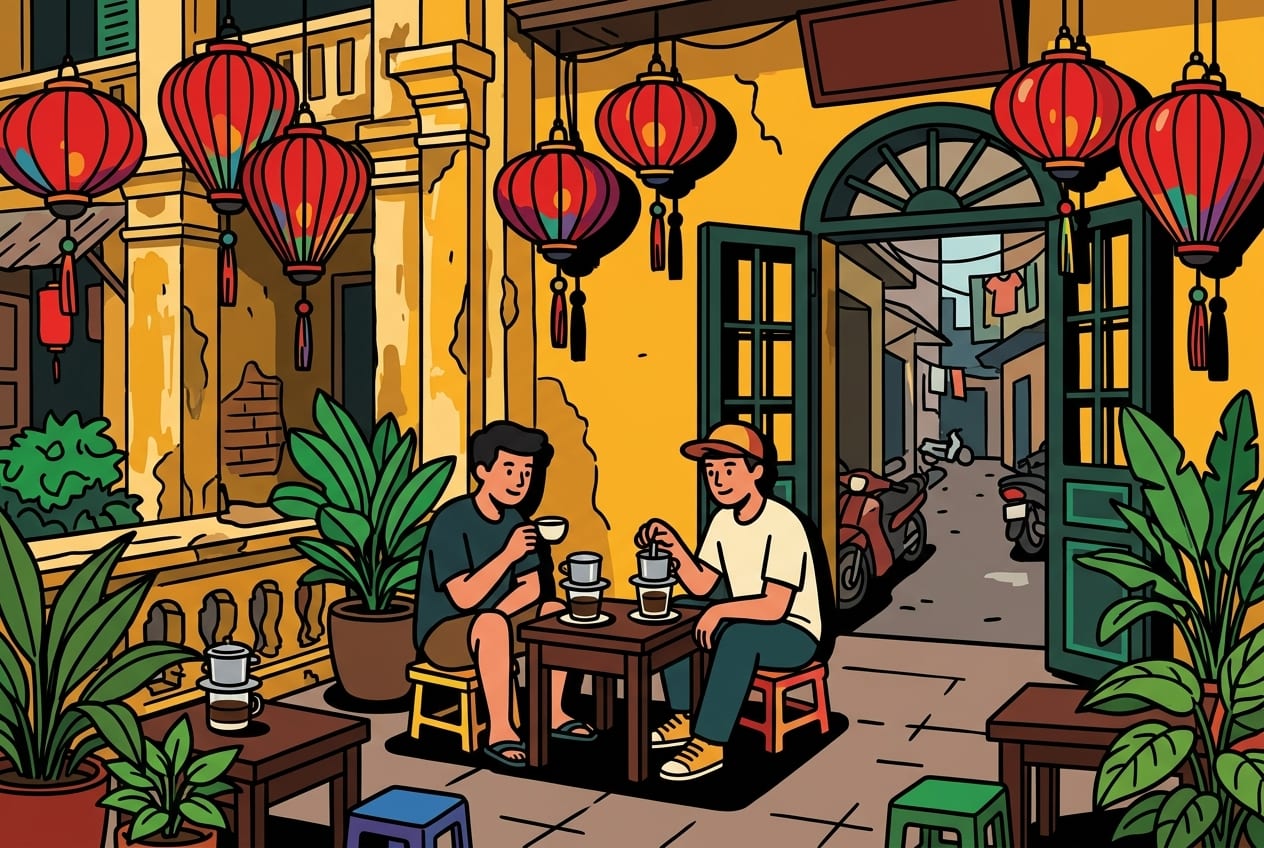
Why Vietnam's 'Heritage Hubs' Are the Hottest New Spots for Culture, Coffee, and Community (And Where to Find Them!)
Vietnam's heritage hubs are buzzing – from ancient towns to repurposed colonial cafes. Discover why these spots are a must-visit for culture, community, and the best slow-drip coffee experiences.