Who Needs a Mall? The Secret Code of Vietnam’s Floating Markets
Step off the land and onto the silt-brown waters of the Mekong. We explain the hidden signals, ancient superstitions, and social rules of Vietnam's iconic floating markets.
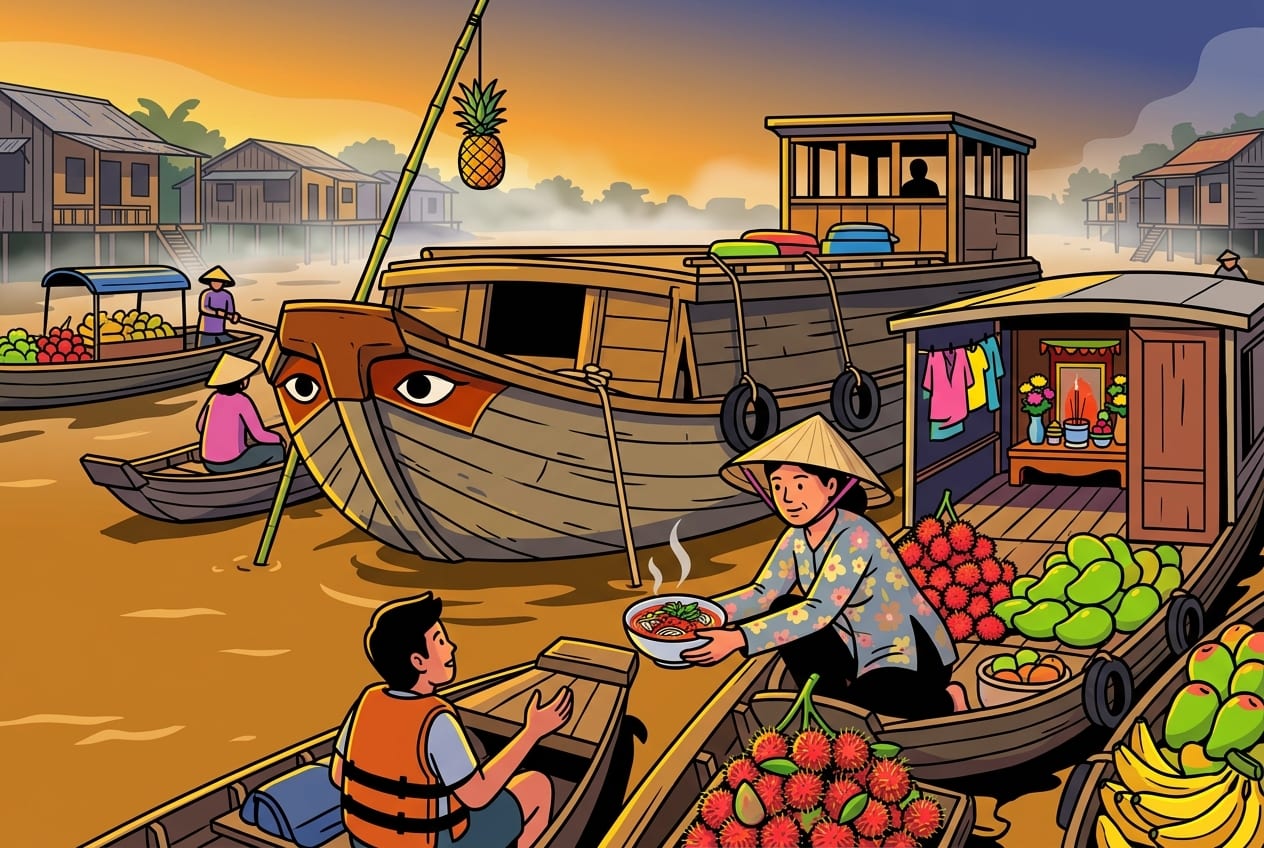
The sun hasn't quite cleared the horizon when the Mekong Delta wakes up. On the silt-brown waters of the Hậu River, the air is thick with humidity and the smell of woodsmoke and ripe fruit. This isn't your typical grocery run. Here, the 'aisles' are narrow channels of water, and the 'shopping carts' are weathered wooden boats known as ghe or tàu. For centuries, the floating markets of the Mekong—like Cai Rang, Phong Dien, and Cai Be—have been the heartbeat of Southern Vietnam. But for a traveler, the scene can look like beautiful, uncoordinated chaos.
To understand the floating market, you have to understand the 'why.' In a region defined by the Mekong River system, water was historically the only reliable highway. Before modern roads connected every village, the river was where people met, traded, and survived. Today, while land markets are common, the floating markets endure as a living testament to a water-based civilization. Navigating them requires more than just a camera; it requires an eye for the subtle signals that govern life on the water.
Why Do They Hang Pineapples on Poles?
The bamboo pole, or 'cây bẹo,' serves as a silent advertisement in the Mekong Delta's floating markets. By hanging samples of their produce—like pineapples, pumpkins, or watermelons—high above the deck, vendors ensure visibility across the crowded, busy waterway, allowing buyers to identify goods from a distance without needing loud megaphones or digital signs.
As you cruise through the market, look up. You’ll see tall bamboo poles standing at the bow of almost every large boat. This is the cây bẹo. In a crowded river where engines are loud and space is tight, shouting your inventory isn't efficient. Instead, the pole tells the story. If you see a cabbage and a bunch of bananas dangling five meters in the air, that boat is your one-stop shop for greens and fruit. It is the original billboard, designed for a 360-degree viewing angle.
However, there are three exceptions to the 'what you see is what you get' rule. First, if you see clothes hanging on the pole, they aren't for sale—the family living on the boat is just doing laundry. Second, if you see a coconut leaf folded into a specific shape, the boat itself might be for sale. Third, some items, like the famous Hủ tiếu noodles, can't be hung on a pole, so you'll have to follow your nose for those. If you're wondering how to ask for the price once you find your fruit, check out our guide on Cái Này Bao Nhiêu? to start the conversation right.
The Mystery of the Painted Eyes
Painted eyes on Vietnamese boat bows are a traditional maritime custom rooted in ancient folklore to ward off river monsters and bad luck. For Mekong residents, these eyes transform the vessel into a living creature that can see through murky waters, ensuring the safety of the crew and the success of their daily trade.
You will notice that almost every wooden boat in the Delta has a pair of large, watchful eyes painted on the prow. This isn't just decoration. To the people of the Mekong, the river is a powerful, sometimes temperamental spirit. The eyes, known as mắt thuyền, are intended to scare away 'aquatic monsters' (traditionally crocodiles or mythical serpents) and to help the boat 'see' its way home through the thick morning fog or the silt-heavy currents.
When you board a small tourist sampan to explore the market, take a moment to look at the eyes. They represent the soul of the vessel. Respecting the boat is respecting the family’s livelihood. Avoid stepping on the 'eyes' or the very front of the boat (the prow), as this is often considered the most sacred part of the vessel where the boat's spirit resides.
How to Buy Breakfast on a Boat
Purchasing food on the river requires a mix of balance and timing. Small 'sampans' acting as mobile kitchens pull alongside larger boats to serve steaming bowls of noodle soup or coffee. Customers usually signal the vendor, wait for the boats to stabilize, and exchange money and bowls using both hands to show respect.
Eating on a floating market is a highlight of any trip to Vietnam. You’ll see small boats with charcoal stoves tucked into the corners, plumes of white steam rising into the humid air. These are the mobile cafes and breakfast joints. When you want a bowl of Bún riêu or a cup of Cà phê sữa đá, the vendor will maneuver their boat until it clinks against yours. They might use a long wooden hook to hold the boats together while they prepare your meal.
The etiquette here is all about the 'handoff.' When the vendor passes you a steaming bowl of noodles over the open water, always receive it with both hands. This isn't just about safety (though dropping a bowl of soup into the Mekong is a tragedy); it’s a sign of lễ phép (politeness/respect). In Vietnamese culture, using two hands acknowledges the effort of the person serving you. When you're finished, wait for the vendor to return to collect the bowl, or pass it back carefully when they are nearby. Don't worry about the swaying; the boat vendors are masters of balance.
The Sacred Rule of the First Customer
In Vietnamese trading culture, the first sale of the day, or 'mở hàng,' is believed to dictate the seller's luck for the remaining hours. Being a polite, quick, and decisive first customer is highly appreciated, as it signals a smooth flow of business, whereas long haggling or walking away can be seen as bad luck.
If you arrive at the market early—around 5:30 AM or 6:00 AM—you might be the first person to approach a vendor. In Vietnam, this carries a heavy spiritual weight. The first customer, or người mở hàng, sets the 'vibe' for the whole day. If the first interaction is pleasant, fast, and successful, the vendor believes they will have a lucky day. If the first customer haggles aggressively for twenty minutes and then walks away without buying anything, the vendor might feel their luck has been 'spoiled' for the day.
As a traveler, you don't have to overpay, but try to be decisive. If you ask for a price and it's reasonable, take the deal. If you're the first customer, a bright smile and a quick transaction will make you the vendor's favorite person of the morning. You might even see them take your money and 'tap' it against their goods to spread the good luck. This is a beautiful, localized piece of intangible cultural heritage that makes the Mekong so special.
Essential Survival Phrases for the River
Navigating a floating market is easier when you use basic Vietnamese phrases for greetings and inquiries. Using polite particles like 'ạ' at the end of sentences and knowing how to ask for prices helps build rapport with vendors who are often working in intense heat and humidity from the very early morning hours.
While many vendors in popular spots like Cai Rang know a few words of English, attempting a bit of Vietnamese goes a long way. The river is loud, so speak clearly. If you want to buy a bunch of fruit, you can point and ask about the price. Remember that in the South, the accent is softer and certain words change compared to the North. For example, 'v' sounds often become 'y' sounds.
Do
- Use both hands when receiving food or change from a vendor.
- Be decisive if you are the first customer of the day (mở hàng).
- Wear a life jacket—the wake from larger boats can be unpredictable.
- Bring small change (10k, 20k, 50k notes) as vendors on small boats rarely have change for large bills.
Don't
- Don't touch or step on the 'eyes' or the prow of the boat.
- Don't haggle excessively for small items like a single coconut or a bowl of soup.
- Avoid throwing any trash into the river; keep it on your boat until you reach land.
What should I do if a vendor hooks their boat to mine but I don't want to buy anything?
Don't panic! This is a standard maneuver for them to stay close in the current. Simply give a polite smile, shake your head slightly, and say 'Dạ thôi, cảm ơn' (No, thank you). They will unhook and move to the next boat without any hard feelings.
Why are the markets so early? Can I visit at 10:00 AM?
By 10:00 AM, most of the wholesale trading is finished and the heat becomes intense. The 'real' magic happens between 5:30 AM and 7:30 AM when the light is soft and the river is most crowded. If you go late, you'll mostly see empty boats and a few tourist-focused stalls.
Is the river water safe? I'm worried about the soup being made with it.
Vendors on the river carry large blue jugs of clean, treated water for cooking and washing dishes. They understand hygiene is important for their business. While the river water is used for the engine or cleaning the deck, the food you eat is prepared with potable water brought from the shore.
Visiting the Mekong Delta floating markets is more than just a photo op; it's an immersion into a way of life that is slowly changing as bridges and roads expand. By understanding the 'cây bẹo,' respecting the 'eyes' of the boat, and participating gracefully in the 'mở hàng' tradition, you become more than a spectator—you become a respectful guest on the water. So, set your alarm early, grab your hat, and get ready for the best breakfast you've ever had on a boat.
Practise the words you just read
Vietnamese phrases for real situations, each with native audio in both accents.
Topics
Read more
Other posts from our Vietnamese learning blog.
By Xinchao team
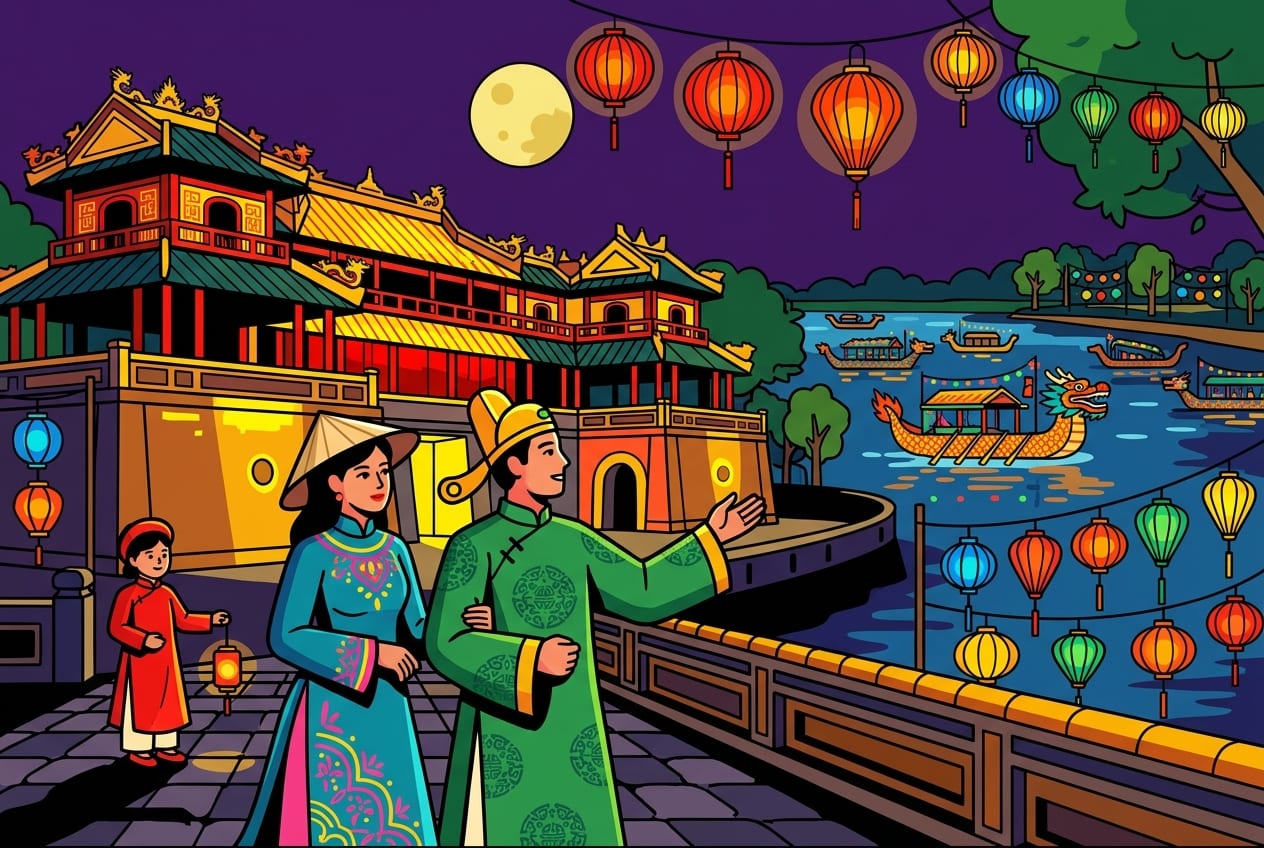
Hue Festival 2026: Time-Traveling to Vietnam's Imperial Heart!
Experience the magic of the 2026 Hue Festival, a year-long celebration of Vietnam's imperial past. From royal court music to dazzling river parades, get ready for an unforgettable cultural immersion in Hue.
By Xinchao team
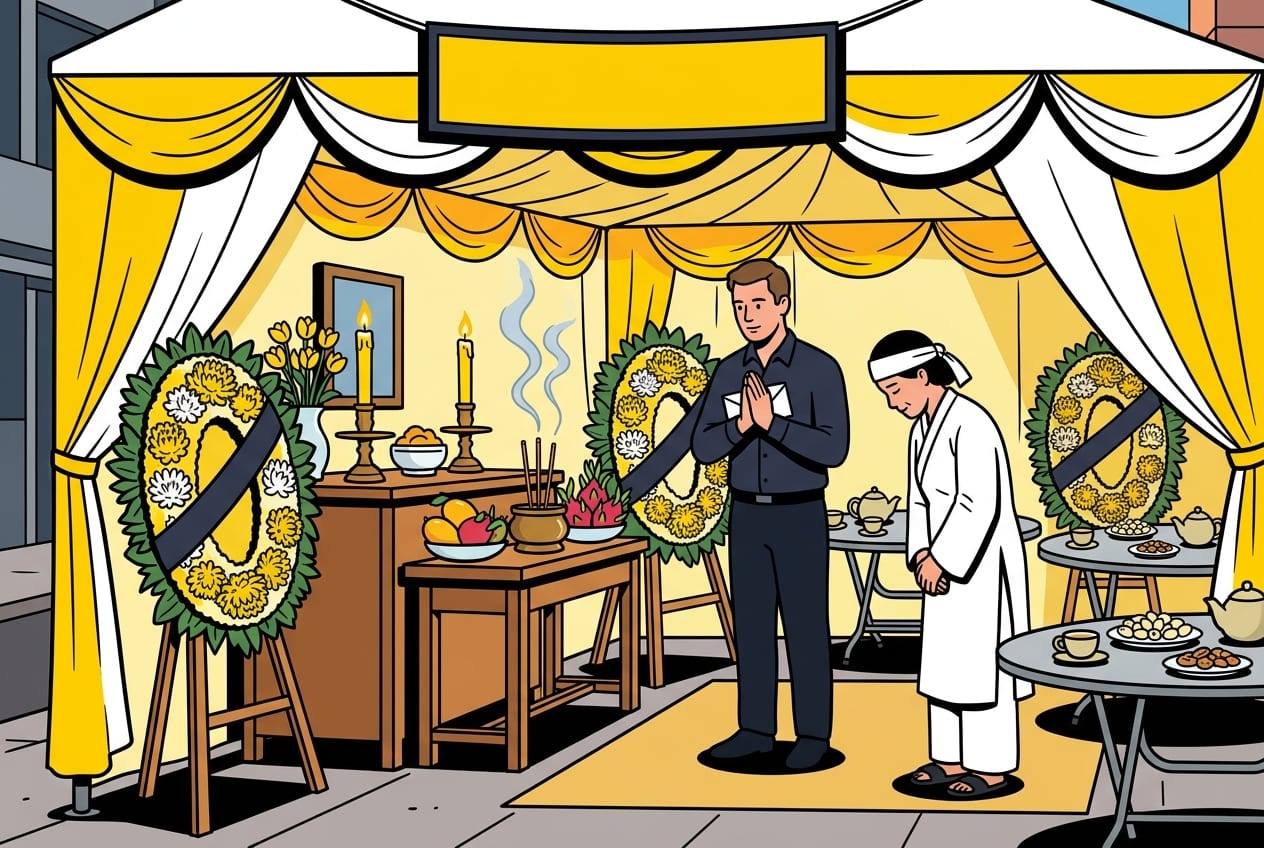
The Yellow Tent on the Street: A Respectful Guide to Attending a Vietnamese Funeral
An essential guide to navigating a Vietnamese funeral (đám tang) with respect, covering dress codes, condolence envelopes, and key cultural taboos.
By Xinchao team
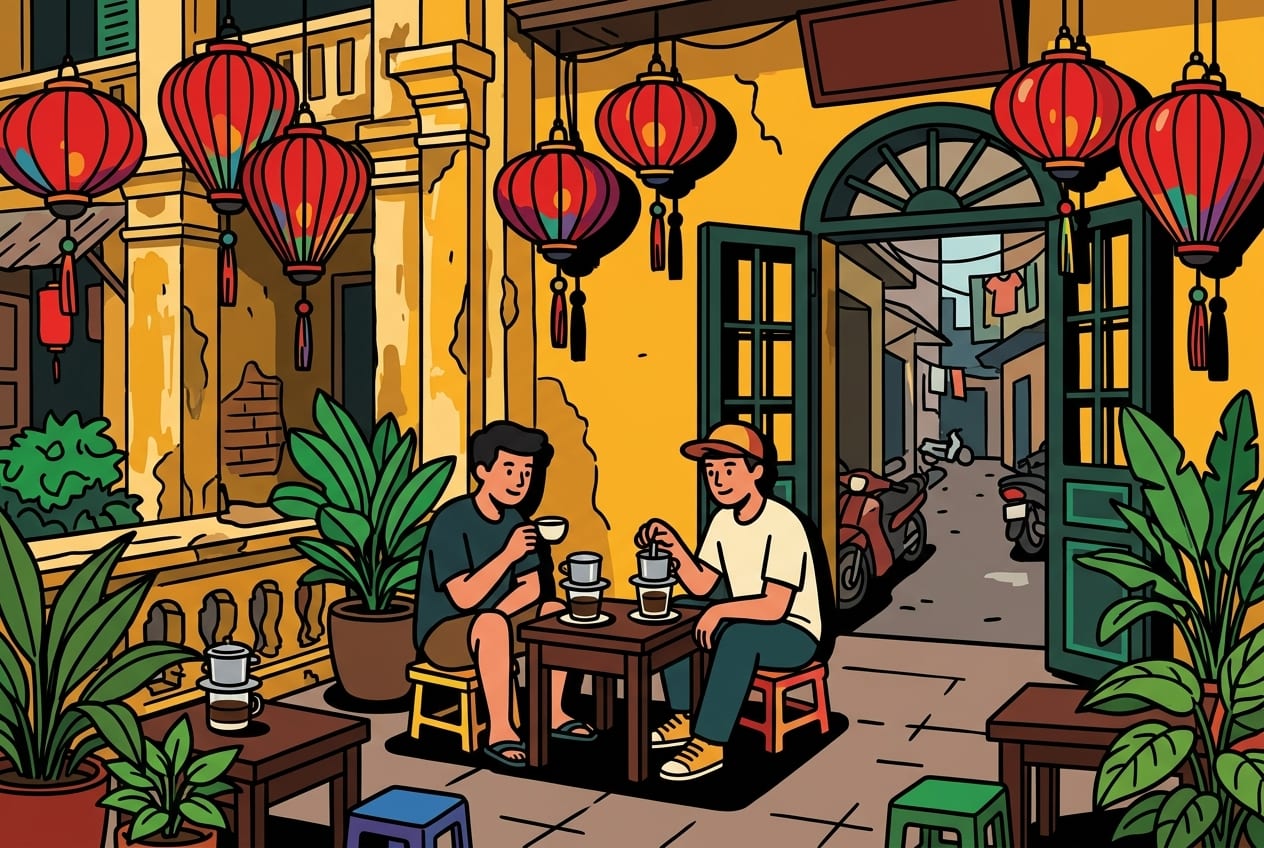
Why Vietnam's 'Heritage Hubs' Are the Hottest New Spots for Culture, Coffee, and Community (And Where to Find Them!)
Vietnam's heritage hubs are buzzing – from ancient towns to repurposed colonial cafes. Discover why these spots are a must-visit for culture, community, and the best slow-drip coffee experiences.