Want to Get Your Hands Dirty (Creatively) in Vietnam? Here's Why You Should!
Dive into Vietnam's rich craft heritage! Learn pottery in Bat Trang, weave in Mai Chau, or make lanterns in Hoi An. Discover where to get hands-on and why these traditions matter.
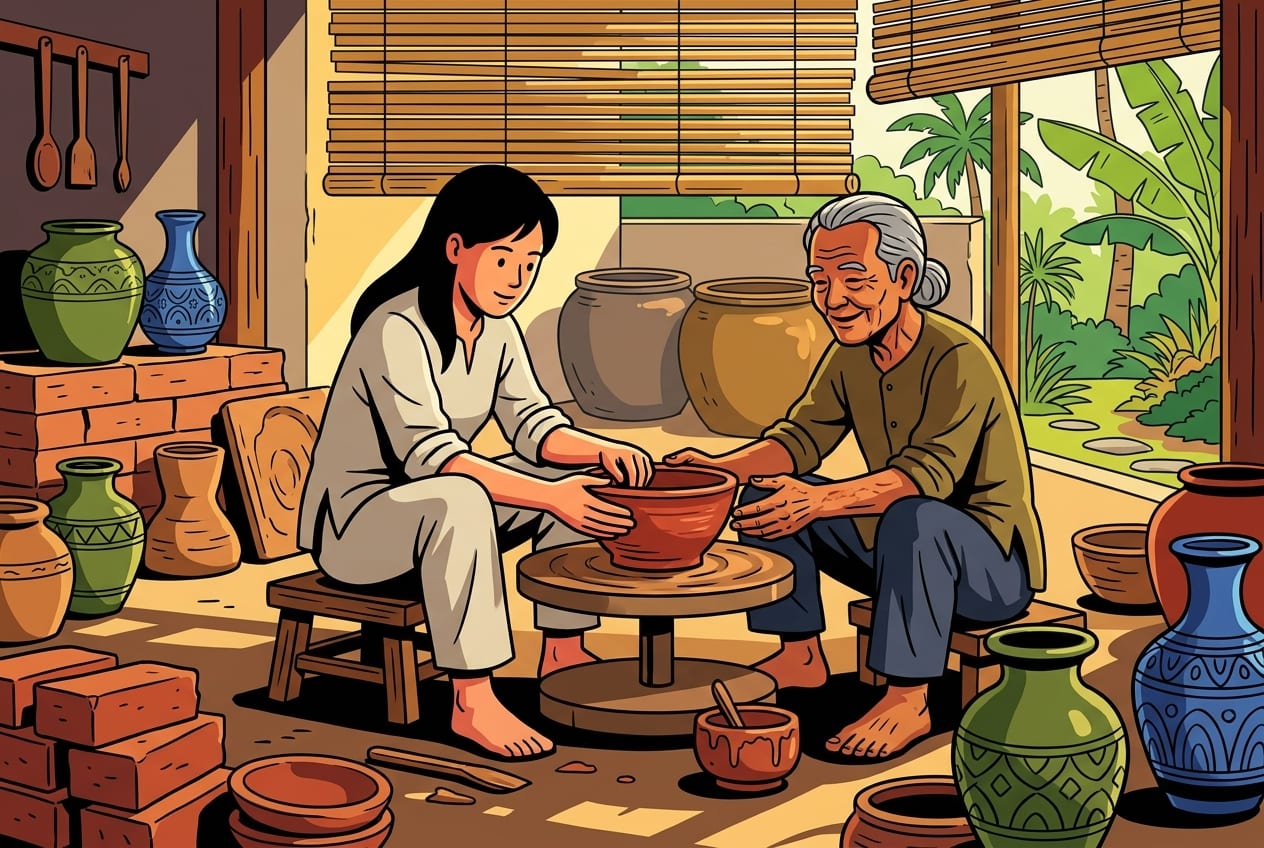
Why Traditional Crafts Still Thrive in Vietnam?
Traditional Vietnamese crafts aren't just pretty souvenirs; they're living stories, passed down through generations. In a world of mass production, Vietnam still treasures the art of making things by hand. Why? Because these crafts are deeply woven into the nation's identity, connecting people to their history, their community, and the very land they live on. When you see a ceramic vase or a woven textile, you're not just looking at an object; you're seeing the hands, the skill, and the soul of a Vietnamese artisan.
For travelers, learning a traditional craft offers a unique window into this soul. It's an invitation to step away from the tourist trails and into the workshops where centuries-old skills are kept alive. Imagine the feeling of shaping clay on a potter's wheel, just as your ancestors might have done, or weaving threads into a pattern that tells an ancient tale. This isn't just a class; it's an immersion into the heart of Vietnamese culture, offering a deeper appreciation than any museum visit could provide. You'll understand why these skills are so valued – because they represent continuity, resilience, and an enduring connection to heritage.
Pottery Power: Shaping History in Bat Trang & Thanh Ha
Vietnamese pottery holds immense cultural significance, historically supplying royal families and serving as a symbol of national identity. Villages like Bat Trang and Thanh Ha continue these ancient traditions, inviting visitors to experience the meticulous process of transforming simple clay into beautiful, enduring art pieces.
Bat Trang: Where Clay Meets Royal Legacy
Bat Trang Ceramic Village, just a short trip from Hanoi, is Vietnam's most famous pottery center, with a history spanning over 700 years. Here, the art of pottery is a proud family legacy, often passed from grandparents to grandchildren. Visiting Bat Trang is a sensory journey: the earthy scent of raw clay, the rhythmic whirring of pottery wheels, and the sight of countless pieces drying in the sun. It's a bustling place, but you'll notice a quiet focus among the artisans, each movement precise and practiced.
Culturally, Bat Trang ceramics were once exclusive to the imperial court, symbolizing refinement and national pride. The motifs you'll see – dragons, phoenixes, lotus flowers – aren't just pretty designs; they're symbols deeply rooted in Vietnamese folklore and Buddhist philosophy, representing power, grace, and purity. Learning here isn't just about making a pot; it's about connecting with a craft that shaped Vietnam's artistic heritage and its royal past.
Many workshops in Bat Trang welcome visitors to try their hand at the potter's wheel. For about 70,000 VND (around $3 USD), you can get a basic pottery-making experience. If you want to keep your masterpiece, there are additional fees for firing and glazing, typically ranging from 50,000 to 250,000 VND ($2-$10 USD) depending on the size and complexity. The firing process takes time, so you might need to arrange for shipping or pick-up later. If you prefer a workshop closer to Hanoi's Old Quarter, places like "Authentic Bat Trang" offer classes for approximately $38, which often includes materials and one piece for glazing and firing.
Do
- Observe artisans quietly and respectfully; their work requires deep concentration.
- Ask permission before taking photos, especially close-ups of people.
- Appreciate the meticulous process and the skill involved, even if you don't buy anything.
Don't
- Touch unfinished or drying pottery without asking; it's very fragile.
- Interrupt an artisan's work with loud conversations or distractions.
- Treat the workshops as a free museum; consider buying a souvenir or participating in a class to support local craftspeople.
Thanh Ha: Hoi An's Rustic Terracotta Secret
Near the charming ancient town of Hoi An lies Thanh Ha Pottery Village, famous for its rustic terracotta products. Unlike Bat Trang's more refined ceramics, Thanh Ha specializes in everyday items like bricks, tiles, and cooking pots, made using traditional hand-and-foot pedal techniques that have remained unchanged for centuries. The village feels a bit like stepping back in time, with humble workshops and the air filled with the earthy smell of fired clay.
The cultural value here lies in the continuity of practical, everyday craft. The pottery of Thanh Ha isn't just art; it's functional, essential to Vietnamese homes and architecture. When you visit, you'll see artisans using their feet to power the wheel, a testament to ingenious, sustainable methods. Admission to Thanh Ha is around 35,000 VND (about $1.50 USD), which typically includes a pottery-making class where you can try the foot-pedal technique yourself and even receive a small clay whistle as a souvenir. It’s a wonderfully hands-on experience that connects you to the simple, enduring traditions of rural Vietnam.
Threads of Tradition: Weaving, Lanterns & More
Beyond pottery, Vietnam's craft landscape is rich with textiles, intricate embroidery, and iconic symbols like the conical hat. These crafts are powerful expressions of community, national pride, and the continuous thread of cultural heritage passed through generations.
Weaving Wonders: The Art of Ethnic Textiles
In the northern mountains of Vietnam, particularly in regions like Mai Chau and Sapa, you'll discover the vibrant world of ethnic minority textiles. Groups like the White Thai and Black H'mong are renowned for their incredible weaving, silk embroidery, batik, and indigo dyeing. These aren't just clothes or blankets; they are visual languages, with patterns and colors telling stories of family history, tribal identity, and spiritual beliefs. The deep indigo of the H'mong clothing, for example, is not just a dye; it's a labor-intensive process that connects them to their natural environment and their ancestors.
A traditional weaving workshop, often found in a simple room within a stilt house, is a serene experience. The air is calm, punctuated by the rhythmic clack-clack of large wooden handlooms. Artisans, usually women dressed in their traditional attire, sit patiently, their fingers deftly manipulating shuttles and threads. You'll see baskets overflowing with natural-dyed yarns – rich indigos, vibrant reds, earthy tones – waiting to be transformed. While structured workshops for individual travelers might be less common than pottery, many homestays and community tourism initiatives in Mai Chau or Sapa offer opportunities to observe, learn a few basic stitches, or even try the loom. This engagement helps support these communities and ensures these precious traditions continue.
Hoi An's Luminous Legacy: Lanterns & Embroidery
Hoi An, with its ancient town charm, shines brightest with its silk lanterns. These colorful, foldable lanterns are more than just decoration; they symbolize peace, prosperity, and good fortune in Vietnamese culture. Walking through Hoi An at night, under the glow of hundreds of lanterns, feels magical, and learning to make one yourself is a fantastic way to capture that magic.
Lantern-making classes are widely available throughout Hoi An, costing anywhere from $10 to $35 and lasting 1 to 2.5 hours. You'll learn to assemble the bamboo frame and stretch the silk fabric, creating your own unique, foldable souvenir. It's a surprisingly meditative process and a wonderful way to understand the simple elegance of Vietnamese design. Hoi An is also known for its delicate embroidery, often seen in intricate patterns on clothing and household items, showcasing another facet of Vietnamese textile artistry.
Beyond the Loom: Iconic Nón Lá and Lacquer Art
The conical hat, or nón lá, is perhaps the most iconic symbol of Vietnamese life. It's not just headwear; it's a practical tool offering protection from sun and rain, and a graceful emblem of Vietnamese women. In Hue, Thuy Xuan village is famous for its nón lá making, where you can find workshops for $5-$20 to learn how to weave the palm leaves and bamboo that form its distinctive shape. Each hat is a testament to simple, functional beauty and the resourcefulness of Vietnamese culture.
Another exquisite craft is lacquerware. This ancient art involves multiple layers of resin from the lacquer tree, polished to a brilliant sheen and often inlaid with mother-of-pearl or painted with intricate scenes. It's a time-consuming process, requiring immense patience and skill. In Hanoi, workshops like Tran Anh Tuan's or those in Ha Thai village offer classes where you can create your own lacquer piece for around $22, giving you a taste of this sophisticated art form and an appreciation for its intricate beauty.
Ready to Get Crafty? Practical Tips for Your Workshop Adventure
Embracing these hands-on experiences offers not just a unique souvenir but a deeper appreciation for Vietnam's enduring artistic soul. To make the most of your craft adventure, here are a few practical tips to keep in mind for booking and participating in workshops.
Booking your craft workshop is easier than ever. You can often find and book sessions through international platforms like Viator, GetYourGuide, or Klook, especially for popular locations like Bat Trang or Hoi An lantern making. However, don't hesitate to ask your hotel or a local tour operator for recommendations, as they might know of smaller, authentic local studios that offer a more intimate experience. It's always a good idea to book structured sessions with English-speaking instructors in advance, especially during peak travel seasons, to ensure a smooth and enjoyable experience.
When it comes to pottery, remember that your beautiful clay creation won't be ready to take home immediately. Firing and glazing take time – often a few days to a week – so confirm if these processes are included in the price and inquire about shipping options for your finished piece. Many workshops are accustomed to sending items internationally, though this will be an additional cost. For other crafts, like lantern making or conical hat weaving, you'll usually be able to take your creation with you on the same day.
Most importantly, approach these workshops with an open mind and a willingness to learn. The artisans are often incredibly skilled and proud of their heritage, and your interest is a form of respect. Even if your final product isn't perfect, the experience of creating something with your own hands, guided by a local master, is truly priceless. It’s a chance to connect with Vietnam on a deeper, more personal level, understanding the dedication and tradition behind every handmade item you encounter.
If I make a pottery piece, can I take it home right away?
Not usually. After you shape the clay, it needs to dry completely, then be fired in a kiln, and often glazed and fired again. This process can take several days to a week. Most workshops can arrange for shipping your finished piece to your home, but it will be an extra cost, so be sure to inquire about the timeline and shipping options when you book your class.
Is it appropriate to bargain for the price of a craft workshop?
While bargaining is common in Vietnamese markets for goods, it's generally not expected or appropriate for structured workshop fees, especially if you're booking through an official platform or a reputable studio with advertised prices. These prices often cover materials, instruction, and the artisan's time. If you're in a very casual, rural setting, you might politely inquire, but it's best to respect the stated cost.
Do I need to speak Vietnamese to participate in a craft workshop?
No, many workshops, especially those catering to tourists in popular areas like Bat Trang, Hoi An, or Hanoi, will have instructors who speak English or at least enough to guide you through the process. When booking, it's a good idea to confirm if an English-speaking instructor is available to ensure you get the most out of your learning experience.
Practise the words you just read
Vietnamese phrases for real situations, each with native audio in both accents.
Topics
Read more
Other posts from our Vietnamese learning blog.

By Xinchao team
Hue Festival 2026: Time-Traveling to Vietnam's Imperial Heart!
Experience the magic of the 2026 Hue Festival, a year-long celebration of Vietnam's imperial past. From royal court music to dazzling river parades, get ready for an unforgettable cultural immersion in Hue.
By Xinchao team
The Yellow Tent on the Street: A Respectful Guide to Attending a Vietnamese Funeral
An essential guide to navigating a Vietnamese funeral (đám tang) with respect, covering dress codes, condolence envelopes, and key cultural taboos.
By Xinchao team
Why Vietnam's 'Heritage Hubs' Are the Hottest New Spots for Culture, Coffee, and Community (And Where to Find Them!)
Vietnam's heritage hubs are buzzing – from ancient towns to repurposed colonial cafes. Discover why these spots are a must-visit for culture, community, and the best slow-drip coffee experiences.