Is Vietnam Finally Trading the Conical Hat for a Silicon Valley Hoodie?
Explore Vietnam's 'Kỉ Nguyên Vươn Mình' (Era of Rising Up). Discover how a new generation is blending national pride with global tech ambitions and modern etiquette.

What Exactly is This 'New Era' Everyone is Talking About?
Vietnam is transitioning from a focus on recovery to a bold pursuit of global leadership. This 'Era of Rising Up' reflects a collective shift in mindset where national pride is no longer just about history, but about future-defining industries like semiconductors, green energy, and digital innovation on a global scale.
If you walk through the streets of District 1 in Ho Chi Minh City or the Nam Tu Liem district in Hanoi today, you will notice something different. It is not just the glass skyscrapers or the electric taxis humming quietly past. It is an energy—a palpable sense of momentum. For decades, the global narrative of Vietnam was rooted in the past, often tied to images of rice paddies and historical struggle. But today, the country is entering what leaders and citizens call 'Kỉ Nguyên Vươn Mình,' or the Era of Rising Up. This isn't just a political slogan; it is a psychological shift. It represents the moment Vietnam stops looking back at what it survived and starts looking forward at what it can build.
This new era is defined by a desire to move up the 'value chain.' Instead of being the world's factory for clothes and shoes, Vietnam is positioning itself as a hub for high-tech manufacturing and digital services. You see it in the way young people talk about their careers and the way the government courts global tech giants. The 'conical hat' (nón lá) remains a beloved symbol of heritage, but the 'Silicon Valley hoodie'—symbolizing innovation and the startup spirit—is becoming the new uniform for a generation that wants to compete on the world stage. It is a fascinating time to witness, as a nation of 100 million people collectively decides that their time to shine is right now.
The Youth: From 'Cày Thuê' to Global Founders
The younger generation in Vietnam is moving away from the 'outsourcing' mentality, known as 'cày thuê,' towards building homegrown startups and brands. This shift is fueled by a desire to represent Vietnam internationally, blending traditional values with a high-tech, entrepreneurial spirit that values creativity over simple repetition.
In the past, a 'good job' for a young Vietnamese person often meant working for a large foreign corporation. There was a sense of safety in being an employee for a global brand. Today, that mindset is being replaced by 'Khởi nghiệp' (starting a business). Gen Z and Millennials are no longer content with 'cày thuê'—a term that literally means 'plowing for hire' or working for someone else's dream. They want to be the ones owning the 'plow.' This is why coffee shops in Vietnam are packed not just with people chatting, but with 'digital nomads' and local entrepreneurs hunched over MacBooks, coding the next big app or designing a sustainable fashion line.
What makes this generation unique is their 'Global-Local' balance. They are fluent in English and savvy with international trends, yet they are deeply patriotic. They don't want to leave Vietnam to find success; they want to bring success to Vietnam. You’ll see young founders wearing modern, minimalist suits that incorporate traditional 'brocade' (thổ cẩm) patterns from ethnic minorities. This isn't just a fashion choice; it’s a statement. They are saying, 'I am a global professional, but I carry my culture with me.' This confidence is the engine of the 'Vươn Mình' era. They are no longer asking for a seat at the table; they are building their own table.
Social Etiquette in the Digital Age: The 'Face' of a Modern Nation
Modern Vietnamese etiquette now balances traditional respect for hierarchy with a new, professional directness required by the global market. While 'saving face' remains important, there is a growing emphasis on transparency, punctuality, and digital literacy, reflecting a society that is becoming more efficient while maintaining its core cultural identity.
As Vietnam integrates with the world, social rules are evolving. Traditional Vietnamese culture places a high value on 'Face' (Sĩ diện)—the idea of maintaining dignity and respect in the eyes of others. In the old days, this might have meant avoiding direct conflict or saying 'yes' even when you meant 'no' to avoid being rude. However, in the 'Vươn Mình' era, the definition of 'Face' is changing. For the modern professional, 'saving face' now means being reliable, punctual, and delivering high-quality work. A young developer knows that missing a deadline with an international client loses more 'face' than a direct, honest conversation about a problem.
You will also see this in the way people network. While the traditional 'nhậu' (drinking) culture is still a major part of business, it is being supplemented—and sometimes replaced—by professional networking events and LinkedIn culture. Business cards are still exchanged with two hands as a sign of respect, but now those cards likely have a QR code leading to a digital portfolio. The etiquette of the new era is a hybrid: it keeps the warmth and respect of the past but adds the speed and transparency of the future. If you are meeting a young Vietnamese professional, don't be surprised if they are more direct and 'to the point' than you expected. They value your time because they value their own progress.
Why National Pride is Getting a High-Tech Makeover
National pride in Vietnam has evolved from celebrating past victories to showcasing modern achievements in technology and infrastructure. Today, a new bridge, a locally manufactured electric vehicle, or a successful Vietnamese-led AI project serves as a powerful symbol of the country's progress and its readiness to compete internationally.
In the past, if you asked a Vietnamese person what they were proud of, they might point to the history of defending the nation. While that pride remains bedrock, there is a new layer on top: pride in creation. When VinFast, a Vietnamese automotive company, started exporting electric vehicles to the US, the social media buzz in Vietnam was electric. It wasn't just about a car; it was about the fact that 'Made in Vietnam' was becoming 'Designed and Engineered in Vietnam.' This shift is a core part of the 'Vươn Mình' narrative.
This tech-driven pride is visible everywhere. From the massive FPT Software campuses that house thousands of engineers to the local gamers who dominate international esports, the message is clear: Vietnam is a 'tech dragon' in the making. This pride manifests in a very supportive 'buy local' movement. Vietnamese consumers are increasingly choosing high-quality local brands over foreign ones, not just out of duty, but because the quality is genuinely there. When you visit, you’ll see people proudly using Zalo (a local messaging app) and paying with MoMo (a local e-wallet). Supporting these platforms is seen as a small, daily act of patriotism in the new era.
The 'Vươn Mình' Mindset in Daily Life
On the streets, the 'Vươn Mình' mindset is visible in the rapid adoption of digital payments and the hustle of young professionals. This daily ambition is driven by a deep-seated desire to see Vietnam succeed, making every small business venture or tech skill learned a contribution to the national narrative.
You don't need to be in a boardroom to see this era in action. Go to a small 'bánh mì' cart on a street corner. Even the elderly auntie selling sandwiches likely has a VietQR code taped to her cart. She isn't just selling bread; she is part of a digitized economy. This rapid adoption of technology across all age groups is a hallmark of the 'Rising Up' era. People are hungry for efficiency and progress. There is a sense that the country is on a fast track, and no one wants to be left behind. This 'hustle' is different from the survivalist hustle of the 1990s; it is an aspirational hustle.
Education is another area where this mindset shines. English centers are packed at 9:00 PM on weeknights with people of all ages. Parents invest heavily in 'STEAM' (Science, Technology, Engineering, Arts, and Mathematics) education for their children. This isn't just about getting a job; it's about giving the next generation the tools to lead. The 'Vươn Mình' era is, at its heart, an investment in human potential. When you talk to locals, you’ll find an infectious optimism. They know the challenges—traffic, pollution, bureaucracy—but they see them as hurdles to be cleared, not permanent states of being. The 'Era of Rising Up' is the story of a nation that has found its voice and is ready to speak to the world.
Do
- Do acknowledge and praise local innovations or brands like VinFast or FPT; it shows you recognize their progress.
- Do use digital payment methods (like QR codes) when possible; it shows you are in sync with their modern lifestyle.
- Do be punctual for business meetings; modern Vietnamese professionals value time and efficiency highly.
Don't
- Don't assume Vietnam is still just a 'cheap labor' or 'post-war' destination; this can be seen as outdated or even offensive.
- Don't be surprised by direct questions about your work or tech skills; it's often a sign of genuine interest and networking.
- Don't dismiss traditional customs; the 'new era' is about blending the old with the new, not replacing it entirely.
Does the 'Era of Rising Up' mean Vietnam is becoming less traditional?
Not at all. In fact, it's about 'Modernizing Tradition.' You'll see young tech CEOs visiting temples or wearing modernized Ao Dai. The goal is to use technology to preserve and promote Vietnamese culture, not to lose it to Westernization.
What should I talk about with a young Vietnamese professional to build rapport?
Ask them about their 'khởi nghiệp' (startup) ideas, the tech scene in their city, or their favorite local brands. They are very proud of the country's current growth and love discussing how Vietnam is changing for the better.
Is 'Kỉ Nguyên Vươn Mình' just for the wealthy in the cities?
While it's most visible in cities like Saigon and Hanoi, the mindset is national. Digital transformation is reaching rural areas through smartphones and e-commerce, allowing farmers and small-town artisans to reach global markets directly.
Practise the words you just read
Vietnamese phrases for real situations, each with native audio in both accents.
Topics
Read more
Other posts from our Vietnamese learning blog.
By Xinchao team
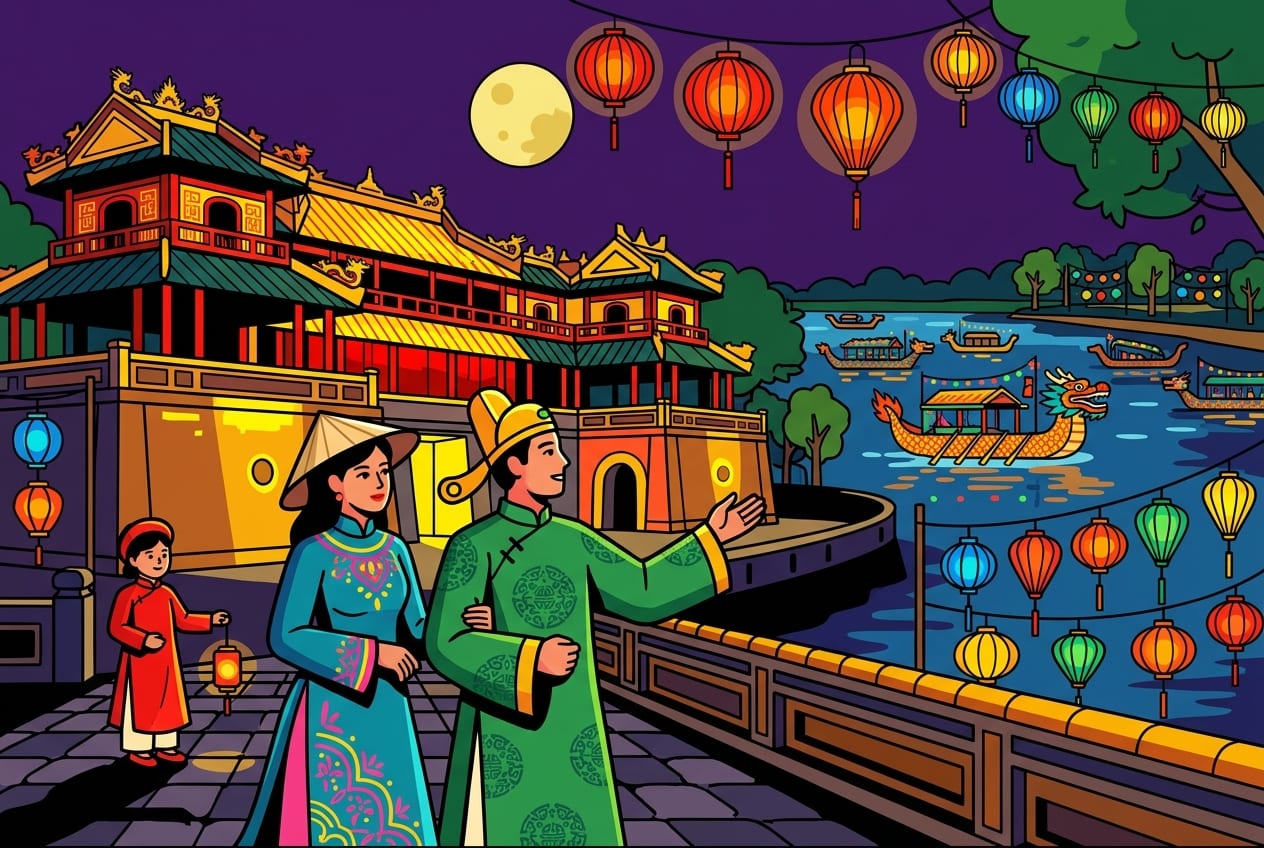
Hue Festival 2026: Time-Traveling to Vietnam's Imperial Heart!
Experience the magic of the 2026 Hue Festival, a year-long celebration of Vietnam's imperial past. From royal court music to dazzling river parades, get ready for an unforgettable cultural immersion in Hue.

By Xinchao team
The Yellow Tent on the Street: A Respectful Guide to Attending a Vietnamese Funeral
An essential guide to navigating a Vietnamese funeral (đám tang) with respect, covering dress codes, condolence envelopes, and key cultural taboos.
By Xinchao team
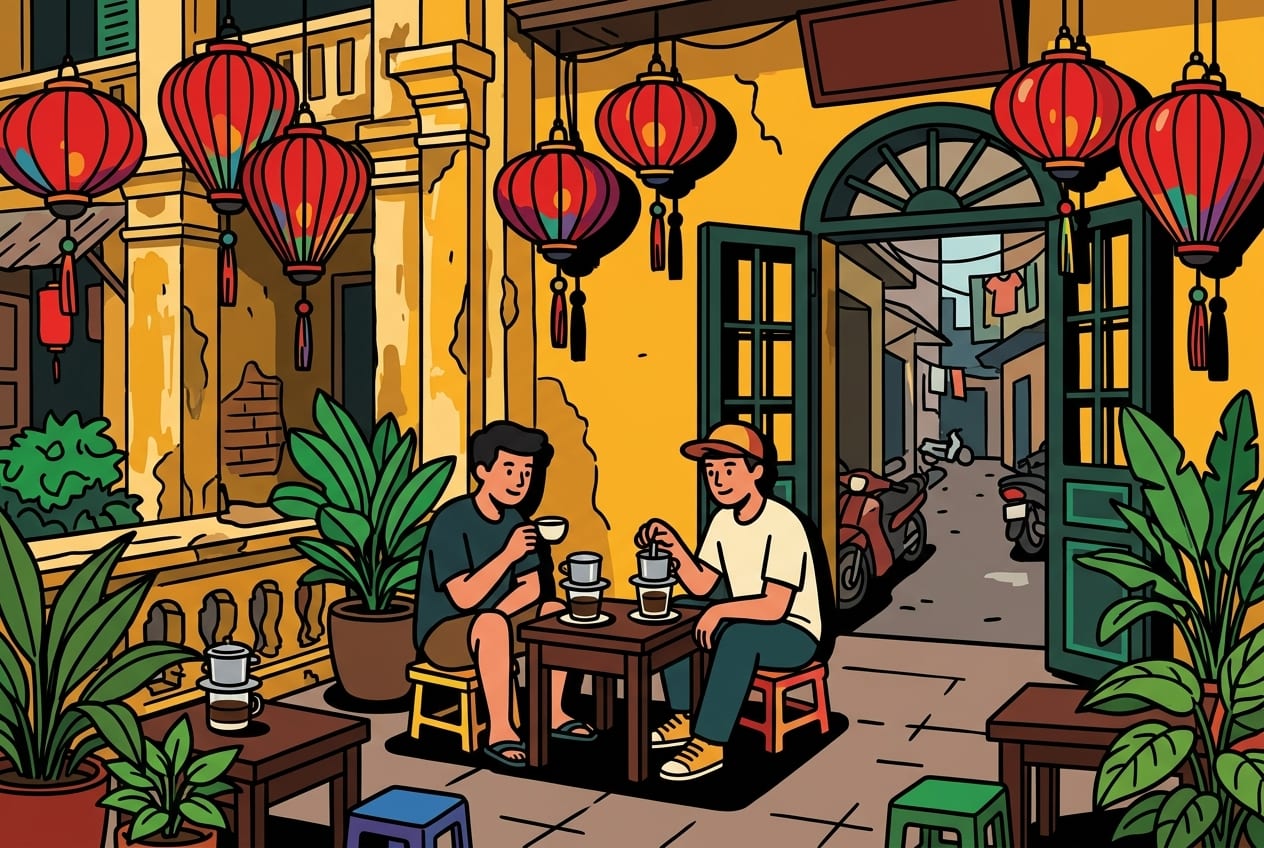
Why Vietnam's 'Heritage Hubs' Are the Hottest New Spots for Culture, Coffee, and Community (And Where to Find Them!)
Vietnam's heritage hubs are buzzing – from ancient towns to repurposed colonial cafes. Discover why these spots are a must-visit for culture, community, and the best slow-drip coffee experiences.