Mastering the Sidewalk: Your Guide to Vietnamese Street Food Culture
Learn the unwritten rules of eating on a Vietnamese sidewalk. From plastic stool etiquette to the art of condiments, eat like a local with confidence.
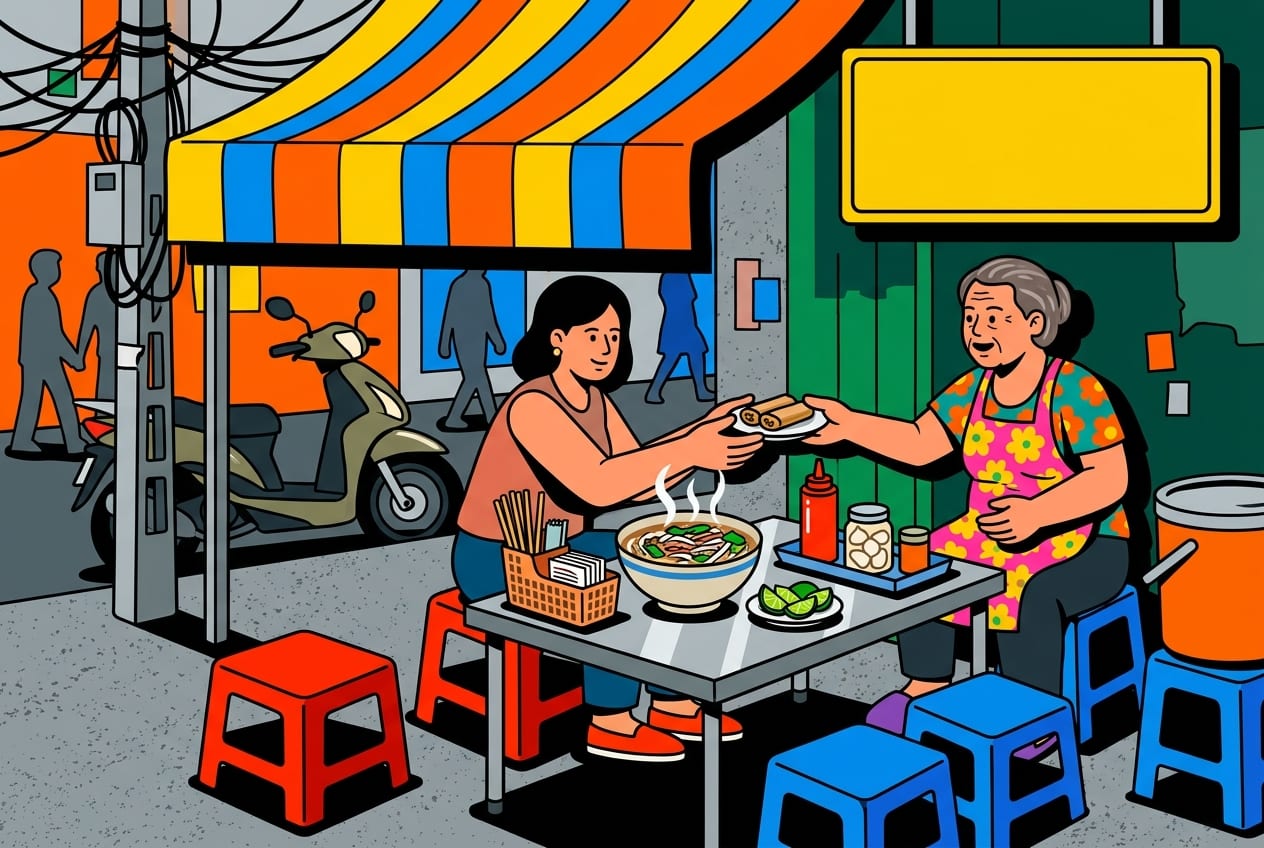
The Magic of the Blue Plastic Stool
When you arrive in Vietnam, the first thing you will notice isn't the tall buildings, but the thousands of tiny plastic stools lining the sidewalks. To a traveler, they might look like children's furniture. To a Vietnamese person, they represent the ultimate dining flexibility. These stools are low to the ground because it allows the 'restaurant' to disappear in minutes if it rains or if the sidewalk needs to be cleared. Sitting low also changes the vibe—everyone is at the same level, whether you are a CEO in a suit or a construction worker. It is the most democratic way to eat. Don't be afraid to squeeze in; sharing a table with a stranger is perfectly normal here.
The 'DIY' Flavor Station
In many Western cultures, adding salt or pepper to a chef's dish might be seen as an insult. In Vietnam, it is the opposite! A street food vendor provides the 'base' (the broth and noodles), but they expect you to be the final chef. On every table, you will find a tray of condiments: lime wedges, bird’s eye chilies, pickled garlic, and fish sauce. If your Phở tastes a bit flat, add a squeeze of lime for acidity. If you want more 'umami,' a dash of fish sauce does the trick. This reflects the Vietnamese philosophy of balance—the five flavors (sweet, sour, salty, bitter, and spicy) should be adjusted to your personal liking. Watching a local carefully prepare their 'dipping sauce' bowl is like watching a scientist in a lab; it’s a serious and delicious ritual.
Respect is in the Hands
Vietnamese culture is deeply rooted in showing respect to those who provide for us. When the vendor brings your steaming bowl of Bún Bò Huế, you might notice they use both hands to set it down. When you pay, or when you receive your change, try to use both hands as well. This 'two-handed' gesture is a silent way of saying 'I acknowledge you and I appreciate this exchange.' It’s a small detail that goes a long way in building a friendly connection with the locals. Even if you don't speak the language, your body language will tell them you are a polite and mindful guest.
Do
- Use two hands when giving or receiving money or food.
- Wipe your chopsticks and spoon with a paper napkin before eating—it's a common local habit to ensure cleanliness.
- Keep your feet tucked under your stool; pointing your feet toward someone or the food is considered impolite.
Don't
- Don't leave your chopsticks sticking vertically out of a bowl of rice—this looks like incense sticks used at funerals and is bad luck.
- Don't be shocked by napkins on the floor. In many busy stalls, the floor is swept at the end of the shift, keeping the table itself clean for the next guest.
Why is there so much paper or trash on the floor under the tables?
This is often a 'culture shock' for travelers. In many traditional street stalls, the rule is 'clean table, dirty floor.' By dropping used napkins on the floor, you keep the small table space clear for food. The staff will sweep everything up in one go once the rush is over. It’s actually a sign that the place is popular and the food is fresh!
Should I tip the street food vendor?
Tipping is not expected at street stalls or small family-run shops. If your meal costs 38,000 VND and you give them 40,000 VND, you can say 'keep the change' (thôi khỏi trả lại) as a kind gesture, but it is never mandatory. Your smile and a 'Cảm ơn' (Thank you) are often appreciated more than a tip.
The Chopstick 'Safety' Check
You will notice a small basket of bamboo chopsticks on every table. Before diving into your noodles, take a napkin and give the tips of the chopsticks a quick wipe. You aren't being rude—locals do this every single time! Because these stalls are open to the street, a little bit of dust is natural. Wiping your utensils is simply a practical 'street hack' to ensure a clean bite. Also, if you see a jar of purple paste (Mắm tôm), give it a smell before you scoop a big glob into your soup. It is fermented shrimp paste—very delicious but very strong and an 'acquired taste' for many beginners!
Eating on the street is the heartbeat of Vietnam. It’s where news is shared, friendships are made, and the best recipes are hidden. By following these small cultural cues—using two hands, balancing your own flavors, and embracing the low stools—you move from being a tourist to being a guest. Enjoy the chaos, the steam, and the incredible flavors of the sidewalk!
Topics
Read more
Other posts from our Vietnamese learning blog.
By Xinchao team
Gặp nhau! Why You Can't Miss Vietnam's First-Ever Culture Day on November 24, 2026!
Mark your calendars! Vietnam's new Culture Day on November 24, 2026, promises a nationwide celebration of heritage. Learn what this "spiritual rendezvous" means for locals and how travelers can dive into unique cultural experiences across the country.
By Xinchao team
Zen & Lens: Your Guide to Pagoda-Hopping for Peace and Perfect Shots in Vietnam
Ready to explore Vietnam's stunning pagodas? Learn the 'whys' behind local customs, master respectful etiquette, and discover the best spots for breathtaking photos and serene reflection. Your guide to an unforgettable cultural adventure awaits!
By Xinchao team
Beyond Bia Hơi: Where the Hops Are Hopping and the Toasts Are Roaring in Vietnam!
From aromatic IPAs to rich coffee stouts, Vietnam's craft beer scene is exploding. Get ready to explore vibrant taprooms, bustling festivals, and master the art of the Vietnamese toast, 'Một, hai, ba, dô!'