Help! Navigating a Medical Emergency on a Vietnamese Street
Witnessing a medical emergency in Vietnam can be overwhelming. Learn the social etiquette, why crowds gather, and how to find a pharmacy fast.
The Chaos of Kindness: Understanding the Crowd
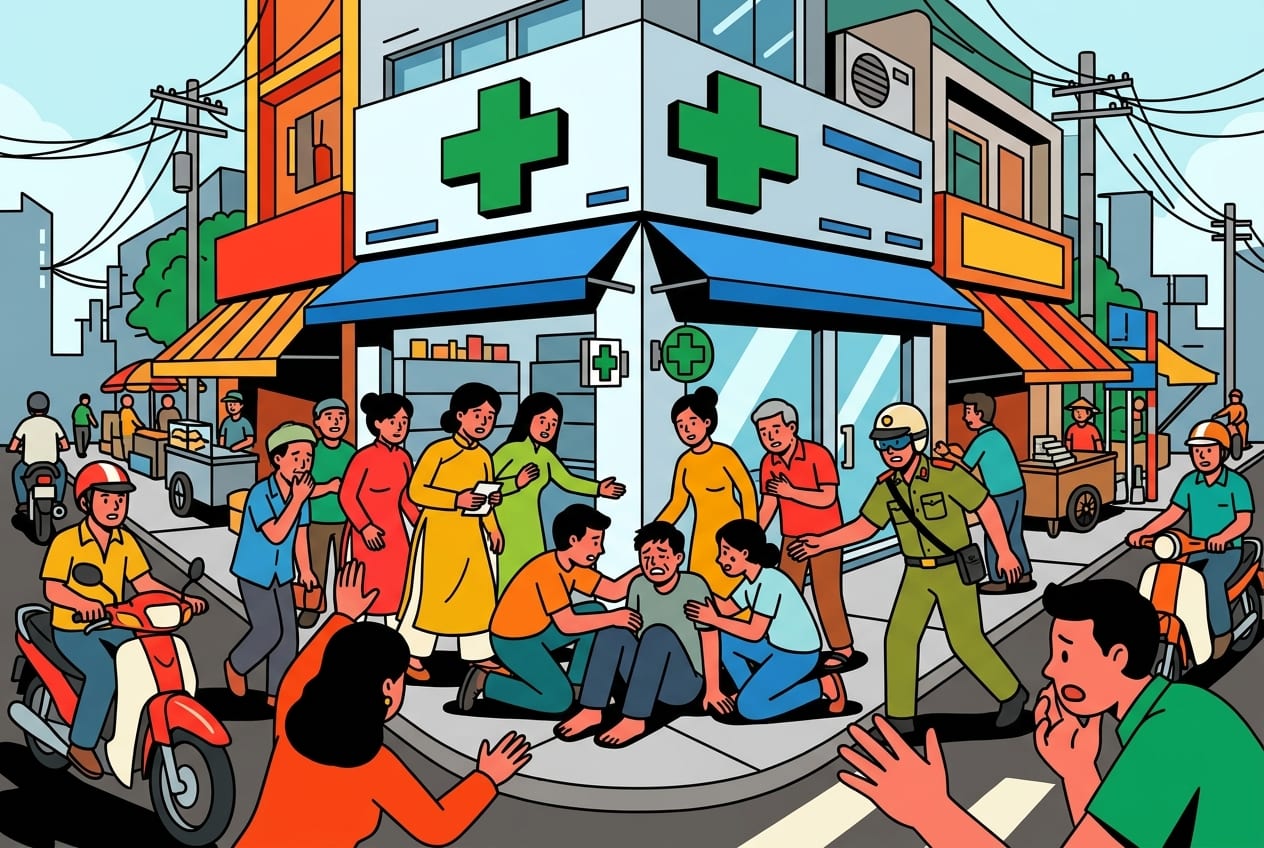
Imagine you are walking down a sunny street in Ho Chi Minh City or Hanoi. The air is thick with the scent of grilled pork and the constant hum of motorbikes. Suddenly, the rhythm breaks. Someone collapses or a motorbike clip occurs. Within seconds, a crowd forms. For many travelers, this 'crowding' can feel suffocating or intrusive, but in Vietnam, it comes from a deep-rooted cultural value: collective responsibility.
In Western cultures, we are often taught to 'give people space' and wait for professionals. In Vietnam, the instinct is to move closer. People want to see if they can help, offer a balm, or simply provide a witness. While it looks chaotic, this is the community’s way of saying, 'You are not alone.' If you are the one in distress, you will likely find five different people trying to give you water, fanning you with a cardboard box, or calling out for a doctor. It is loud and crowded because, in the Vietnamese mindset, ignoring a person in pain is a loss of 'face' for the whole street.
The Green Cross: Your First Port of Call
If you look around any busy intersection, you will likely see a bright green cross. This is the sign of a 'Nhà Thuốc' (Pharmacy). In Vietnam, pharmacies are much more than just shops for aspirin. They are the neighborhood’s first line of medical defense. Pharmacists are highly respected and often act as triage consultants for the community.
If a minor accident happens, don't wait for an ambulance—which can be slow in heavy traffic. Instead, point toward the green cross. The staff there can often provide basic wound care, blood pressure checks, or immediate advice on which local hospital is best for your specific situation. They are used to seeing street injuries and are usually the calmest people in the 'emergency crowd.' Just look for that glowing green sign; it is a universal beacon of safety on the Vietnamese street.
Do
- Stay calm and accept help if locals offer it; it is their way of showing care.
- Look for the 'Nhà Thuốc' (Green Cross) if you need immediate supplies or advice.
- Use a ride-hailing app like Grab or hail a taxi for faster transport to a hospital than an ambulance in peak traffic.
- Keep your insurance details and emergency contacts saved on your phone's lock screen.
Don't
- Don't get angry at the crowd for being close; they aren't trying to be rude, they are concerned.
- Don't assume everyone speaks English; use simple gestures or translation apps to communicate pain levels.
- Don't refuse help just to 'save face' if you are actually hurt.
Why Taxis Often Beat Ambulances
One of the biggest shocks for travelers is that locals rarely wait for the '115' ambulance service for non-life-threatening emergencies. Why? Traffic. A motorbike or a small taxi can weave through the narrow 'hẻm' (alleys) much faster than a large van. If you see someone being bundled into a taxi after a fall, don't be alarmed—this is often the most efficient way to get to the 'Bệnh Viện' (Hospital). The social etiquette here is about speed and pragmatism over formal procedure.
Should I tip the people who helped me on the street?
Generally, no. Offering money in a moment of crisis can sometimes feel like you are 'buying' their kindness, which can be awkward. Instead, a sincere 'Cảm ơn' (Thank you) with a slight bow or a hand over your heart is the best way to show gratitude. If someone goes way out of their way—like driving you to the hospital—you might offer to cover their petrol or taxi fare, but don't be surprised if they refuse.
What if I can't explain my medical history in Vietnamese?
Most large hospitals in major cities have English-speaking staff, but on the street, it's different. Use a translation app or keep a 'medical card' in your wallet written in Vietnamese that lists your allergies and blood type. This is very helpful for the 'crowd' and the pharmacist to give you the right help quickly.
Is it okay to ask the crowd to step back?
Yes, but do it gently. Use a 'pushing' motion with your hands low and say 'Làm ơn, cho tôi không gian' (Please, give me space). If you act panicked or aggressive, the crowd might actually get closer because they think you are getting worse. Staying calm is the best way to manage the crowd's energy.
In our next post, we will look at what happens once you arrive at the hospital and how the 'family-care' system works in Vietnamese wards. For now, remember: the street is your friend, even when it’s crowded.
Topics
Read more
Other posts from our Vietnamese learning blog.
By Xinchao team
Gặp nhau! Why You Can't Miss Vietnam's First-Ever Culture Day on November 24, 2026!
Mark your calendars! Vietnam's new Culture Day on November 24, 2026, promises a nationwide celebration of heritage. Learn what this "spiritual rendezvous" means for locals and how travelers can dive into unique cultural experiences across the country.
By Xinchao team
Zen & Lens: Your Guide to Pagoda-Hopping for Peace and Perfect Shots in Vietnam
Ready to explore Vietnam's stunning pagodas? Learn the 'whys' behind local customs, master respectful etiquette, and discover the best spots for breathtaking photos and serene reflection. Your guide to an unforgettable cultural adventure awaits!
By Xinchao team
Beyond Bia Hơi: Where the Hops Are Hopping and the Toasts Are Roaring in Vietnam!
From aromatic IPAs to rich coffee stouts, Vietnam's craft beer scene is exploding. Get ready to explore vibrant taprooms, bustling festivals, and master the art of the Vietnamese toast, 'Một, hai, ba, dô!'